

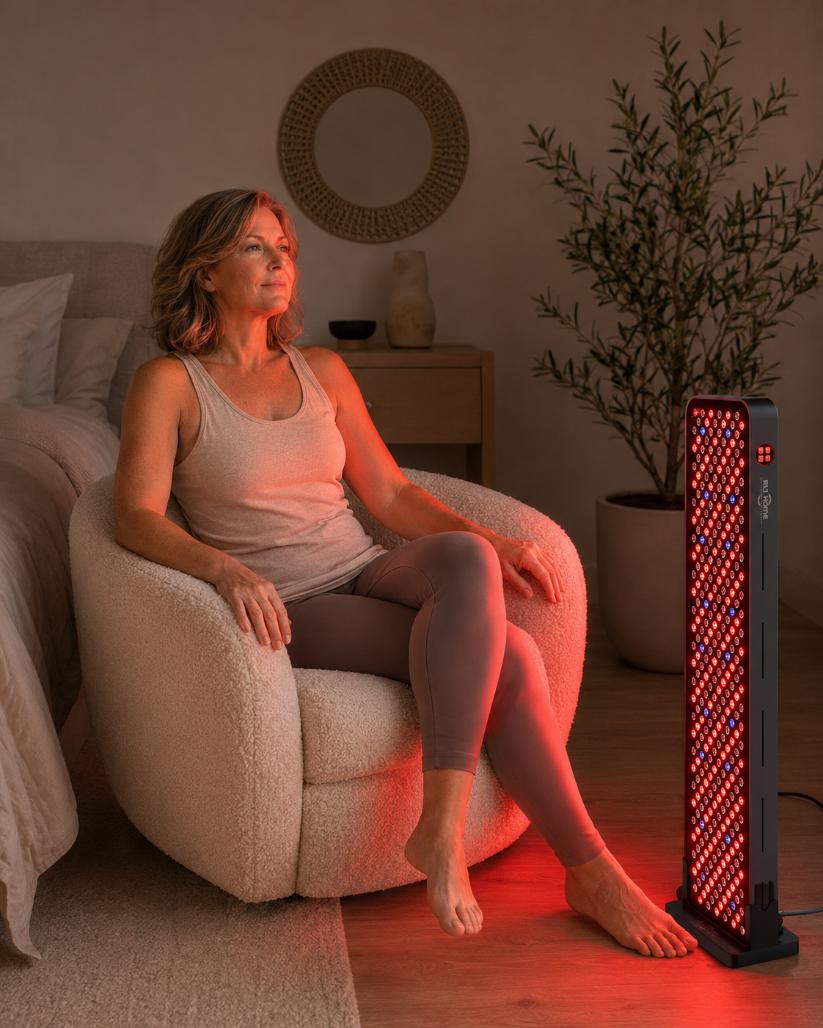
Red light therapy buyers shortlisting premium brands almost always end up weighing the same two names. Mito Red Light, the popular dual-chip specialist with three series spanning every price tier. And RLT Home, the newer challenger whose Total Spectrum series has built a following on transparent specs and science-tuned wavelength density.
Both build serious panels. Both publish irradiance data. Both back their devices with a three-year warranty. Both offer a 60-day trial. So how should a buyer actually choose between them?
This comparison cuts through the marketing and examines what matters. Spectrum coverage, wavelength density, measured irradiance, LED chip design, build quality, treatment modes, included accessories, return policies, warranty coverage, and pricing transparency.
The verdict at the end comes from the data, not the hype.
At-a-glance verdict: RLT Home wins on wavelength depth with 1064nm deep infrared, motorized electric stand included, personalised usage plan, and LED density. Mito Red Light retains an edge on entry-level pricing and breadth of model sizes.
💡 Our Top Pick
After comparing both brands head-to-head on spectrum coverage, measured irradiance, included accessories, trial terms, and pricing transparency, our team found the RLT Home Total Spectrum Ultra to be the better overall choice for buyers who want a true full-body panel with the deepest 1064nm wavelength, an included motorized electric stand, and a free personalised weekly usage plan from the science team.
Best Red Light Therapy Panels of 2026 (Mito Red Light vs RLT Home)
- Best Overall: RLT Home Total Spectrum Ultra
- Best for Deep Tissue (1064nm): RLT Home Total Spectrum Elite
- Best App-Connected Panel: Mito MitoADAPT 4.0
- Best Budget Pick: Mito MitoMID 2.0
- Best Compact Panel: RLT Home Total Spectrum Compact
Current Deals on Both Brands
Now is a great time to invest in a red light therapy panel while saving money. Both brands are running active offers.
- RLT Home: 6% off site-wide with code TOP10 (applied at checkout)
- Mito Red Light: check current promotions on their site
Quick Comparison Table: Mito Red Light vs RLT Home Flagships
| Red Light Therapy Panel | Wavelengths | Irradiance @ 6 inches | Stand & Setup | Starting Price |
|---|---|---|---|---|
| RLT Home Total Spectrum Ultra | 7 (480 / 630 / 660 / 810 / 830 / 850 / 1064nm) | 119.3 mW/cm² (spectrometer peak) | Motorized electric stand included | $2,895 (drops to about $2,721 with TOP10) |
| RLT Home Total Spectrum Elite | 7 (480 / 630 / 660 / 810 / 830 / 850 / 1064nm) | 121.6 mW/cm² (spectrometer peak) | Motorized electric stand included | $4,595 (drops to about $4,319 with TOP10) |
| Mito MitoPRO X 1500X | 6 wavelengths up to 850nm | >130 mW/cm² (brand figure, method not stated) | Stand sold separately ($139 single, $349 universal) | Mid-tier flagship pricing on mitoredlight.com |
| Mito MitoADAPT 4.0 | Multi-wavelength up to 940nm + companion app | Brand figure (method not stated) | Stand sold separately | Flagship pricing on mitoredlight.com |
At a Glance: Mito Red Light vs RLT Home (2026)
| Criterion | Mito Red Light | RLT Home |
| Devices in lineup | MitoPRO+, MitoPRO X (300X, 750X, 1500X, MegaX), MitoADAPT 4.0 | Total Spectrum Mini, Compact, Max, Ultra, Elite |
| Wavelengths | 4 to 8 depending on series (no 1064nm on any Mito panel) | 7 (480/630/660/810/830/850/1064nm) |
| Per-wavelength density published | Partial (MitoPRO X published, others not) | Yes, each band’s percentage published for every model |
| Deepest wavelength | 940nm (MitoADAPT only); MitoPRO+ and MitoPRO X stop at 850nm | 1064nm on every Total Spectrum device |
| LED chip type | Dual-chip (TruDUAL) | Single-chip |
| Irradiance | >130 mW/cm² at 6 in (brand figure, method not stated) | 98.7 to 121.6 mW/cm² across the line (spectrometer peak at 6 in) |
| Stand | Sold separately ($139 single, $349 universal multi-panel; manual) | Included; motorized electric on Ultra and Elite |
| Treatment modes | 3 modes (Red, NIR, Both) on PRO+/PRO X; 11 modes on MitoADAPT | 9 science-built condition modes + custom mode |
| Personalised usage plan | None | Free custom weekly plan from the science team |
| Eye protection in box | Not specified by brand | 2 sets (reading + blackout) |
| Trial | 60 days, no restocking fee, customer pays return shipping | 60 days, no restocking fee, free insured return shipping |
| Warranty | 3 years | 3 years |
| Internet / app | App + data tracking on MitoPRO X and MitoADAPT | None, devices stay offline (for those seeking privacy) |
| FDA compliance | FDA-registered (same listing as RLT Home; brand markets MitoPRO X and MitoADAPT as “medical-grade” / “FDA Class II”) | FDA-registered (same listing as Mito Red Light) |
| Single-panel full-body coverage | MitoPRO X 1500X at 47″ tall x 13″ wide (borderline for tall adults) | Yes, Total Spectrum Ultra (64″) and Elite (65″) |
Compare Specifications Directly on Manufacturer Sites
Review detailed specs, current pricing, and device configurations from both brands. Both offer 60-day trials with three-year warranties.
The Brands at a Glance
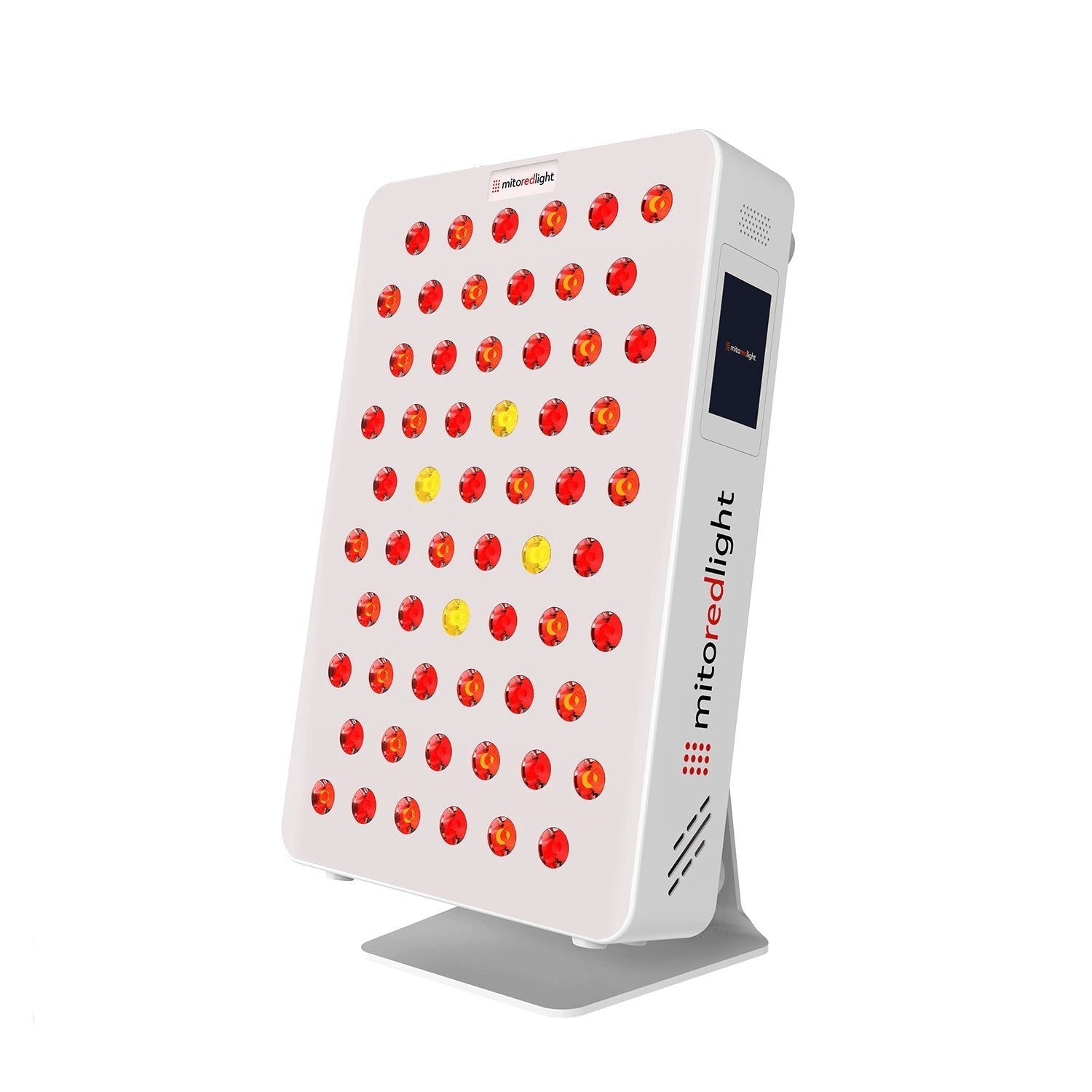
Mito Red Light: A Three-Tier Dual-Chip Specialist
Mito Red Light launched in 2018 and built a reputation around the TruDUAL dual-chip LED. Two light chips sit equally placed inside every diode. The lineup spans three series, each available in four sizes from tabletop to multi-panel array.
The MitoPRO+ is the value tier with four wavelengths. These are 630, 660, 830, and 850nm. No app, and a simple on-off switch. The MitoPRO X is the bestseller, adding 590nm yellow plus 810nm and an app with data tracking.
The MitoADAPT 4.0 is the flagship at eight wavelengths. These include 590, 630, 660, 670, 810, 830, 850, and 940nm. It has 11 condition modes and quad-lens optics.
Notably, no Mito Red Light panel carries 1064nm deep infrared. The deepest wavelength in the entire Mito range is 940nm. That wavelength is available only on the MitoADAPT series. For buyers whose goals depend on the deepest near-infrared band for joints, deep tissue and brain support, that gap matters.
RLT Home: Newer, Transparent, Support-Led
RLT Home’s Total Spectrum series spans five vertical and full-body panels. From the 72-LED Mini to the 864-LED Elite. The brand publishes the exact percentage of LEDs allocated to each of its seven wavelengths.
This includes 14 percent at 1064nm deep infrared. The deepest-penetrating band on any home red light therapy panel. A co-founder explains the spectrum on a YouTube video showing the underlying clinical-study analysis used to engineer each treatment mode.
Notably for buyers, RLT Home includes a free personalised weekly usage plan. After purchase, the customer receives a follow-up from the founder. They share their target conditions. The RLT Home science team writes a custom plan describing which mode to run, for how long, and how often.
Spectrum and Wavelength Density: The Most Important Difference

Both brands list multiple wavelengths, but the spectrum stories diverge sharply. RLT Home covers seven bands including 1064nm. Mito covers between four and eight bands depending on the series. 940nm is the deepest option on the top-tier MitoADAPT only.
What matters is density. This is the percentage of each panel’s LEDs allocated to each wavelength. And therefore total light output. A panel that lists six or eight wavelengths but pours most of its output into the shallower red bands functions differently. In practice, like a much narrower panel for deep-tissue and brain-support goals.
RLT Home Publishes Exact Wavelength Allocation
RLT Home publishes the exact density of every wavelength on every device. The Total Spectrum Max and Elite breakdown looks like this:
| Wavelength | Density | Role |
| 480nm (blue) | 6% | Surface, skin-targeting, acne |
| 630nm (red) | 19% | Surface skin, collagen |
| 660nm (red) | 19% | Surface skin, collagen, hair |
| 810nm (near infrared) | 19% | Muscle, joint, brain |
| 830nm (near infrared) | 14% | Muscle, joint, brain |
| 850nm (near infrared) | 9% | Recovery, fat metabolism |
| 1064nm (deep infrared) | 14% | Joints, deep tissue, brain |
That allocation is deliberately weighted to give meaningful output across both surface and deep-penetrating bands. Notice the 19 percent allocation to 810nm and 14 percent to 1064nm. Those are the wavelengths that reach joints, deep muscle, and brain tissue.
Mito’s Density Story: Strong Surface, No 1064nm
Mito publishes density on the MitoPRO X series. Across its six wavelengths the allocation runs 6% at 590nm, 22% at 630nm, 22% at 660nm, 17% at 810nm, 17% at 830nm and 17% at 850nm. That gives the MitoPRO X a real 810nm and 830nm presence. This is uncommon for the budget-to-mid tier.
What it does not give is any 1064nm. The MitoPRO+ stops at 850nm and skips 810nm entirely. The MitoADAPT 4.0 extends to 940nm but no further. Across the whole Mito lineup, the deepest band is 940nm and only on the flagship series.
For buyers focused on surface-level work, Mito’s spectrum is competent. Surface includes skin, collagen, and mood. For buyers focused on the deeper goals, the missing 1064nm matters more. Deep goals include joint pain, brain support, and deep tissue recovery.
RLT Home Spectrum Advantages
- 14% allocation to 1064nm deep infrared on every model
- 19% allocation to 810nm for muscle and brain support
- Published density data for all seven wavelengths
- Balanced surface and deep-penetration coverage
Mito Spectrum Limitations
- No 1064nm on any panel in entire lineup
- 940nm only available on flagship MitoADAPT series
- MitoPRO+ skips 810nm entirely
- Density data only published for MitoPRO X series
Edge: RLT Home. Wider and deeper density across the spectrum, with a 14 percent allocation to 1064nm that the entire Mito lineup lacks.
Experience the Full Spectrum Difference
RLT Home publishes exact wavelength density, including 14 percent at 1064nm for deep tissue support. Compare their transparent specs with a 60-day, no-restocking-fee trial.
Power and Irradiance: Measured by Independent Third Parties
Comparing irradiance across brands is one of the easiest places to be misled. Two instruments are commonly used. Solar power meters read very high and over-report LED output. Spectrometers are the accurate reference.
Mito’s Published Irradiance
Mito Red Light publishes a brand figure of “greater than 130 mW/cm² at 6 inches” on the MitoPRO X 1500X. The measurement method is not stated in the public spec sheet. Brand figures that read in the 130+ range without a spectrometer note are typically solar-meter readings.
RLT Home’s Spectrometer-Verified Data
RLT Home publishes its spectrometer peak figures directly. Taken at six inches:
| RLT Home Device | Spectrometer @ 6″ |
| Total Spectrum Mini | 98.7 mW/cm² |
| Total Spectrum Compact | 99.0 mW/cm² |
| Total Spectrum Max | 100.5 mW/cm² |
| Total Spectrum Ultra | 119.3 mW/cm² |
| Total Spectrum Elite | 121.6 mW/cm² |
A like-for-like comparison takes a little unpacking. RLT Home’s 100 to 121 mW/cm² figures are spectrometer peaks at six inches. Mito’s 130+ figure has no method disclosed. It is presented as a brand specification rather than third-party verification.
Without a spectrometer reference for Mito’s panels, the cleanest read is this. Mito’s marketed number is likely higher than what a spectrometer would record. This is the same pattern seen across most brands that publish solar-meter numbers.
Edge: RLT Home on measurement transparency. The raw mW/cm² figures look close once measurement methods are aligned. But RLT Home discloses its method openly while Mito does not.
LED Chip Design: Single vs Dual

This is where the two brands diverge by design philosophy. RLT Home uses single-chip 5W LEDs. Each diode emits one wavelength at full power. Mito Red Light uses TruDUAL dual-chip LEDs. Two wavelength chips share a single diode package.
The single-chip case rests on two arguments. First, a cleaner wavelength peak. A single-chip LED produces a more precise, accurate wavelength peak. Second, deeper penetration. All of the LED’s power goes to one wavelength. So each band reaches deeper.
A dual-chip LED splits its power between two wavelengths. This makes each one weaker per band and shallower per band.
The dual-chip counter-argument is that splitting the power across two adjacent wavelengths produces a more even distribution across the panel surface. That suits surface-level conditions where uniform skin coverage matters more than deep penetration.
The rebuttal is that mitochondrial activation is systemic. The effect triggered at one point in tissue spreads to nearby cells. So a more uneven surface distribution does not handicap deep results.
For buyers prioritising depth, single-chip is the stronger design. Depth includes joints, deep tissue, and brain. For buyers focused on the skin surface, the dual-chip argument carries more weight.
Edge: RLT Home for depth-oriented goals. Mito’s dual-chip design is reasonable for surface work but loses to single-chip on penetration.
Form Factor and LED Density
Mito Red Light’s full-body single panel is the MitoPRO X 1500X. It measures 47 inches tall by 13 inches wide. That is tall enough to cover the torso plus thighs. Wide enough for shoulders in one position. But at 47 inches it is short for tall adults lying down.
The Total Spectrum Ultra at 64 inches and Total Spectrum Elite at 65 inches are designed as full-body lie-under panels from the ground up.
LED density also tells a story. The MitoPRO X 1500X carries 300 LEDs across 611 square inches. That gives roughly 0.49 LEDs per square inch. The RLT Home Total Spectrum Max carries 360 LEDs across 581 square inches. That gives roughly 0.62 LEDs per square inch.
That is a 26 percent denser LED array. It delivers a more uniform, intense light field on a similarly-sized panel.
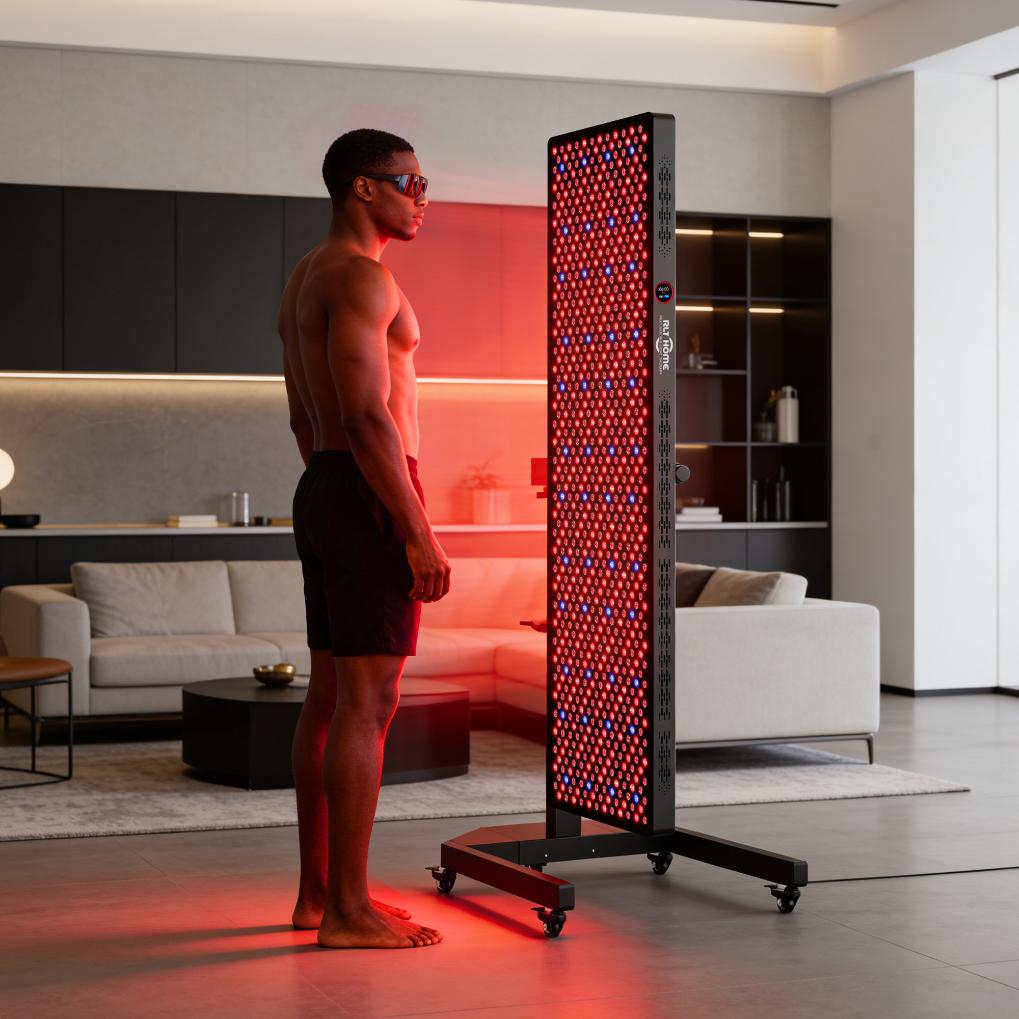
RLT Home’s Purpose-Built Full-Body Panels
RLT Home’s full-body devices are designed as single full-body panels. The Total Spectrum Ultra at 64 inches. The Total Spectrum Elite at 65 inches. They mount on an included motorized electric stand that tilts horizontal. Users can lie under them.
One device, one position, full coverage. To achieve genuine full-body lie-under coverage with Mito Red Light, a buyer would need different configurations. Stack a MitoPRO 1500X with a MitoPRO 750X. About 70 inches combined. Or step up to the MitoPRO MegaX multi-panel system.
Both involve more assembly. And a manual stand rather than a motorized electric one.
Edge: RLT Home for buyers who want a single, simple full-body panel with a motorized stand. And for buyers who value LED density on the mid-size class.
Treatment Modes and Personalised Guidance
Mito’s Mode System
The MitoPRO+ has three modes. Full Red, full NIR, or both together. The MitoPRO X has the same three modes plus an app and brightness control. The MitoADAPT 4.0 extends to 11 condition-specific modes with full app session tracking.
No personalised plan is offered. Users choose from presets. Or build custom programs themselves through the app interface where available.
RLT Home’s Science-Built Modes Plus Custom Plans
RLT Home’s Total Spectrum series includes nine prebuilt treatment modes plus a custom mode. Each was built by filtering the Vladimir Heiskanen photobiomodulation database. Approximately 8,980 studies. Down to the 1,861 human trials with successful results.
After purchase, every customer receives an email from the co-founder. They share their conditions. The RLT Home science team writes a free custom weekly plan. This describes which mode to use, for how long, and how often.
For a first-time buyer working out how to use a panel for several health goals at once, that guidance matters. It can be the difference between consistent results and a device that gathers dust.
Edge: RLT Home. More science-built modes on every model plus a real personalised plan from the science team.
What’s in the Box
| Item | Mito Red Light | RLT Home |
| The panel | Yes | Yes |
| Remote control | Touch panel (no remote) | Yes (voice on Ultra) |
| Eye protection | Not specified | 2 sets (reading + blackout) |
| Stand | Not included (~$139 single, ~$349 universal multi-panel; manual) | Included (motorized electric on Ultra and Elite) |
| Hanging hardware | Included | Power cable and manual |
Once a buyer factors in the cost of an equivalent stand, the gap between Mito’s headline price and RLT Home’s total price narrows considerably. And Mito’s universal stand is manual, not motorized. So the configurations are not strictly equivalent on full-body lie-under use.
Edge: RLT Home for everything-in-the-box convenience and motorized electric stands on full-body models.
Trial, Returns, and Warranty
Both brands offer a 60-day trial and a three-year warranty. Where they differ is the cost of changing one’s mind.
RLT Home Trial Terms
- 60-day trial period
- No restocking fee
- Free insured return shipping
- Three-year warranty coverage
Mito Red Light Trial Terms
- 60-day trial period
- No restocking fee
- Customer pays return shipping (unless the optional paid “Free Returns & Package Protection” was added at checkout)
- Three-year warranty coverage
For a $1,299 MitoPRO 1500X with a stand, return shipping on a 30-pound package can run $80 to $150. This depends on destination. That is a meaningful penalty for buyers who want to genuinely test the device before committing.
Edge: RLT Home on risk-free trial mechanics with free insured return shipping.
Privacy and Connectivity
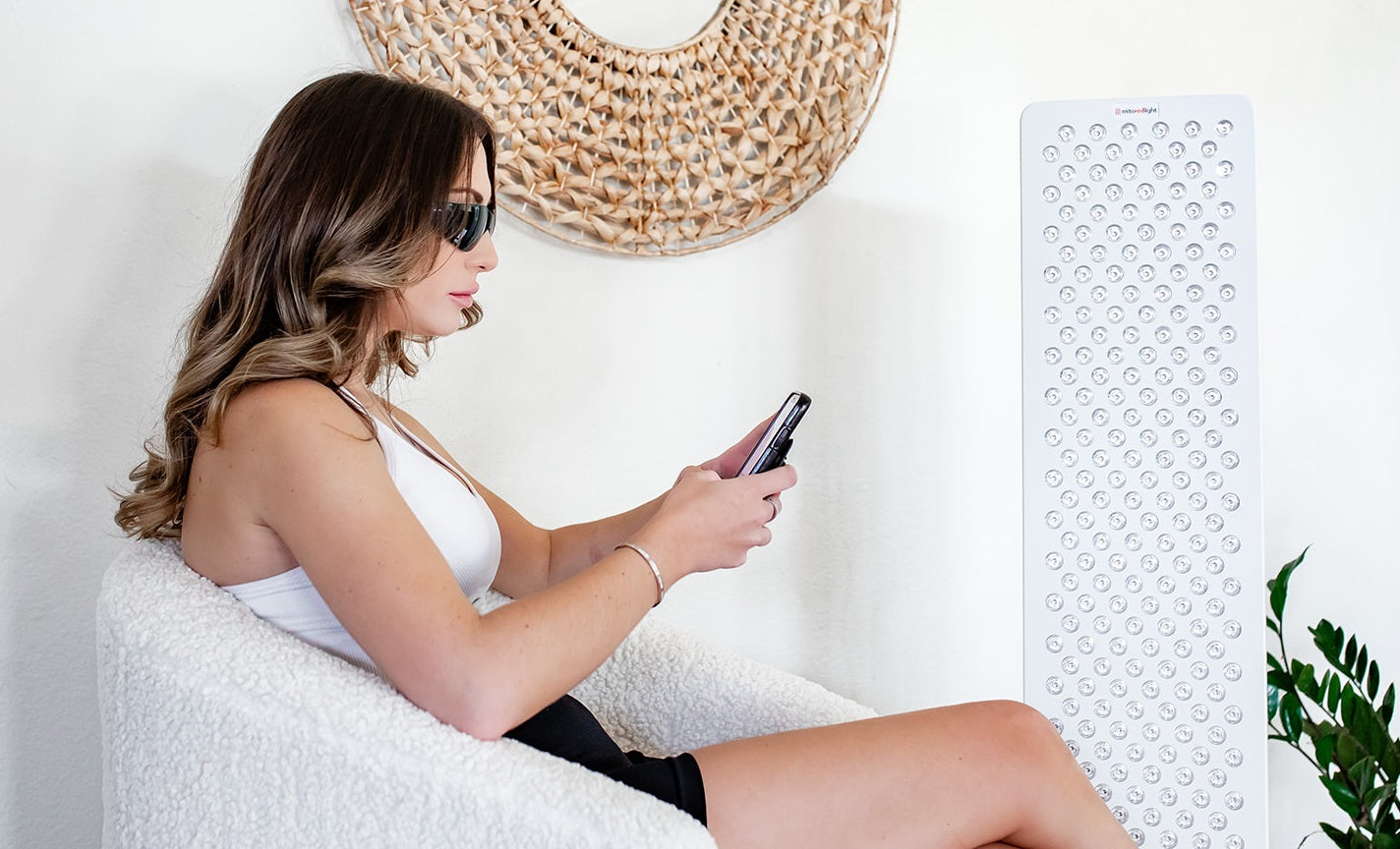
Mito Red Light’s MitoPRO X and MitoADAPT panels connect to a companion app. With session and data tracking. The MitoPRO+ has no app. Runs on a simple on-off switch. For buyers who value app convenience and structured tracking, that is a feature.
RLT Home’s Total Spectrum devices, by deliberate design, do not connect to the internet. No companion app. No data leaves the device. For buyers who consider health data sensitive, that is a feature too.
Edge: Depends on the buyer. Convenience-oriented buyers may prefer Mito’s app integration. Privacy-focused buyers will prefer RLT Home’s offline-by-design approach.
A Note on “Medical-Grade” and “FDA Class II” Wording
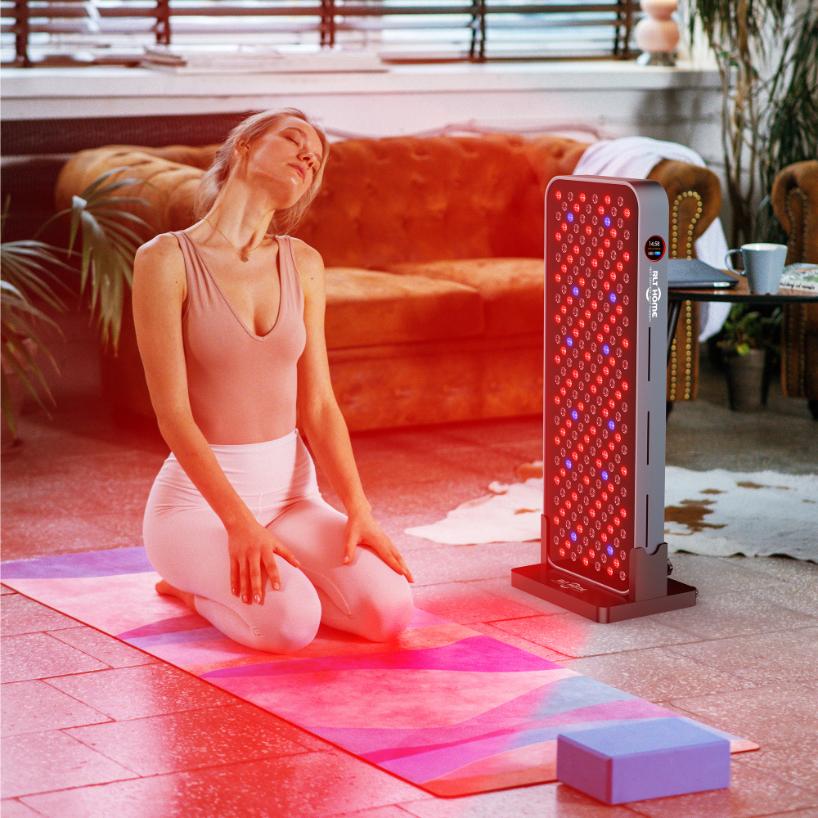
Mito Red Light markets its MitoPRO X and MitoADAPT products as medical-grade. References FDA Class II. This wording warrants context.
Every red light therapy panel sold for home use in the United States is FDA-registered. That is, listed with the FDA. But registration is not the same as FDA clearance. No home red light panel currently holds a medical-grade performance classification.
Mito Red Light is not unique in using this wording. But it is worth understanding what FDA-registration does and does not mean. RLT Home describes its devices accurately as FDA-registered. Does not use medical-grade wording. Both brands hold the same FDA listing. The difference is purely in how each chooses to describe it.
This is a factual distinction, not a criticism. But for buyers who care about precise regulatory language, it matters.
Pricing: An Apples-to-Apples Comparison
Sticker prices alone do not tell the full story. Mito Red Light’s headline prices exclude the stand. Below is a fair comparison built around equivalent setups.
Tier 1: Mid-Size Single Panel
| Item | Mito Red Light MitoPRO 1500X | RLT Home Total Spectrum Max |
| LEDs | 300 | 360 |
| Panel dimensions | 47″ tall x 13″ wide | 49.2″ tall x 11.8″ wide |
| LED density | 0.49 LEDs per sq in | 0.62 LEDs per sq in (26% denser) |
| Panel price | $1,299 | $1,795 (use code TOP10 for an extra 6% off, drops to $1,687) |
| Stand | Not included; equivalent single-panel stand sold separately at ~$139 | Included |
| Realistic total cost | ~$1,438 (panel + stand) | $1,795 panel and stand bundled, or $1,687 with code TOP10 |
| Body coverage in one session | 47″ tall covers torso and thighs; tall adults will shift position | 49.2″ tall covers torso, abdomen and thighs in one session |
| Deepest wavelength | 850nm (no 1064nm) | 1064nm at 14% density |
The Mito 1500X is competitively priced for buyers who want a decent single panel at the cheapest tier. With the equivalent stand added, the gap to the RLT Home Total Spectrum Max with TOP10 is about $250.
For that difference the RLT Home buyer gets 20 percent more LEDs. A 26 percent denser LED array. 1064nm deep infrared which the Mito panel lacks entirely. Single-chip LED design. A personalised usage plan. And free insured return shipping.
Tier 2: Full-Body Lie-Under Setup
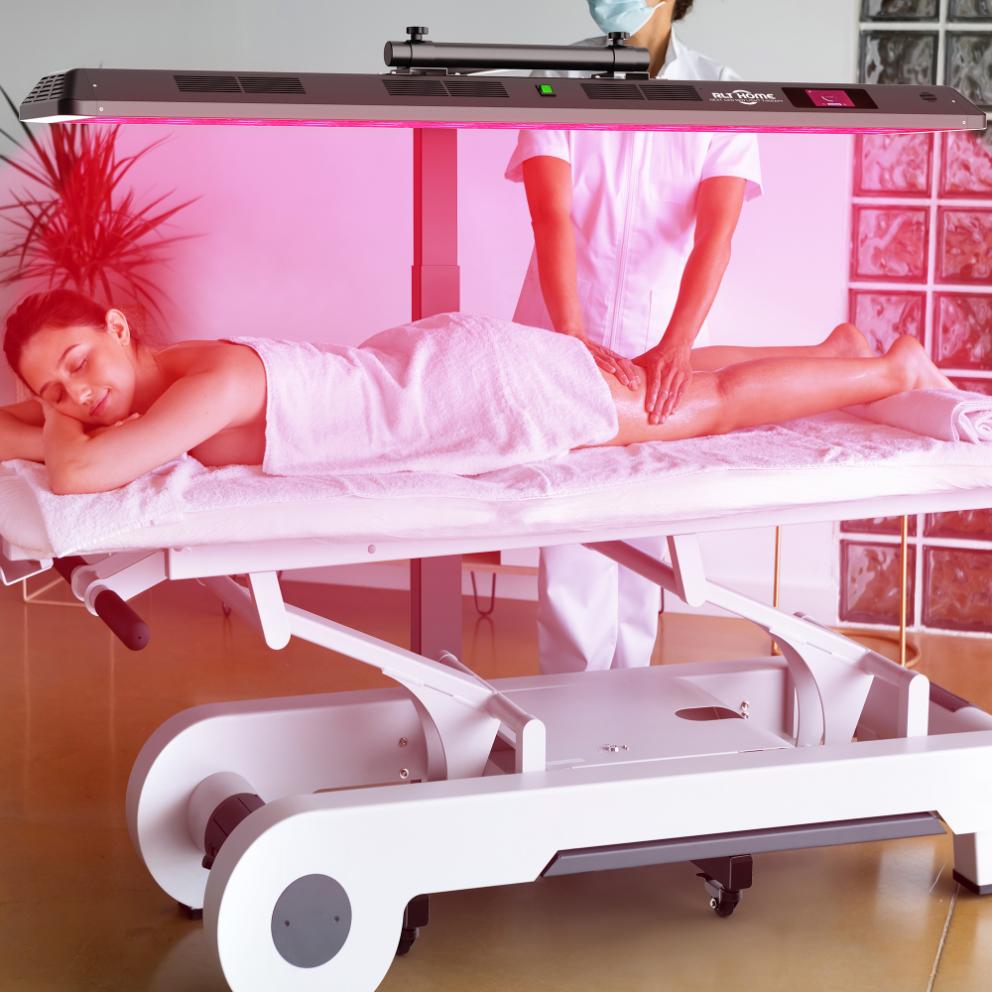
Mito Red Light has no single full-body panel. The MitoPRO 1500X at 47 inches is borderline for full-body. The honest equivalent to the RLT Home Total Spectrum Ultra is a MitoPRO 1500X stacked with a MitoPRO 750X on the universal manual stand.
| Item | Mito Red Light 1500X + 750X + universal stand | RLT Home Total Spectrum Ultra |
| LEDs | 300 + 150 = ~450 LEDs (estimated) | 480 |
| Panel dimensions | Two panels stacked, roughly 70″ tall x 13″ wide overall | Single 64.3″ tall x 11.8″ wide panel |
| Panel + stand cost | ~$1,299 + ~$1,049 + ~$349 universal stand = ~$2,697 | $2,895 with motorized electric stand included, or $2,721 with code TOP10 |
| Stand type | Manual universal stand (vertical or horizontal positioning) | Motorized electric stand (tilts horizontal automatically) |
| Body coverage in one session | Stacked to full height but only 13″ wide; users shift slightly to cover edges | 64.3″ tall covers head to toe in a single lie-down position |
| Deepest wavelength | 850nm (no 1064nm) | 1064nm at 14% density |
Once both setups can do the same job, the gap is about $200. With the affiliate code TOP10, the RLT Home Total Spectrum Ultra drops to $2,721. Putting it within $25 of the 2-panel Mito build.
For that essentially identical price the RLT Home buyer gets a single 64-inch purpose-built panel. A true motorized electric stand rather than a manual one. The broader wavelength distribution including 1064nm. 9 science-built treatment modes. Voice control plus Bluetooth music. And the free personalised usage plan.
Tier 3: Mito’s Multi-Panel MegaX Setup
Mito promotes the MitoPRO MegaX as a connectable multi-panel system. Spanning 2 to 4 panels with up to 1,200 LEDs total. Starting prices begin around $1,699 for a base configuration. Approach $3,000 for the full multi-panel build. The MegaX setup measures roughly 70″ tall by 27″ wide at the full 4-panel configuration on the universal stand.
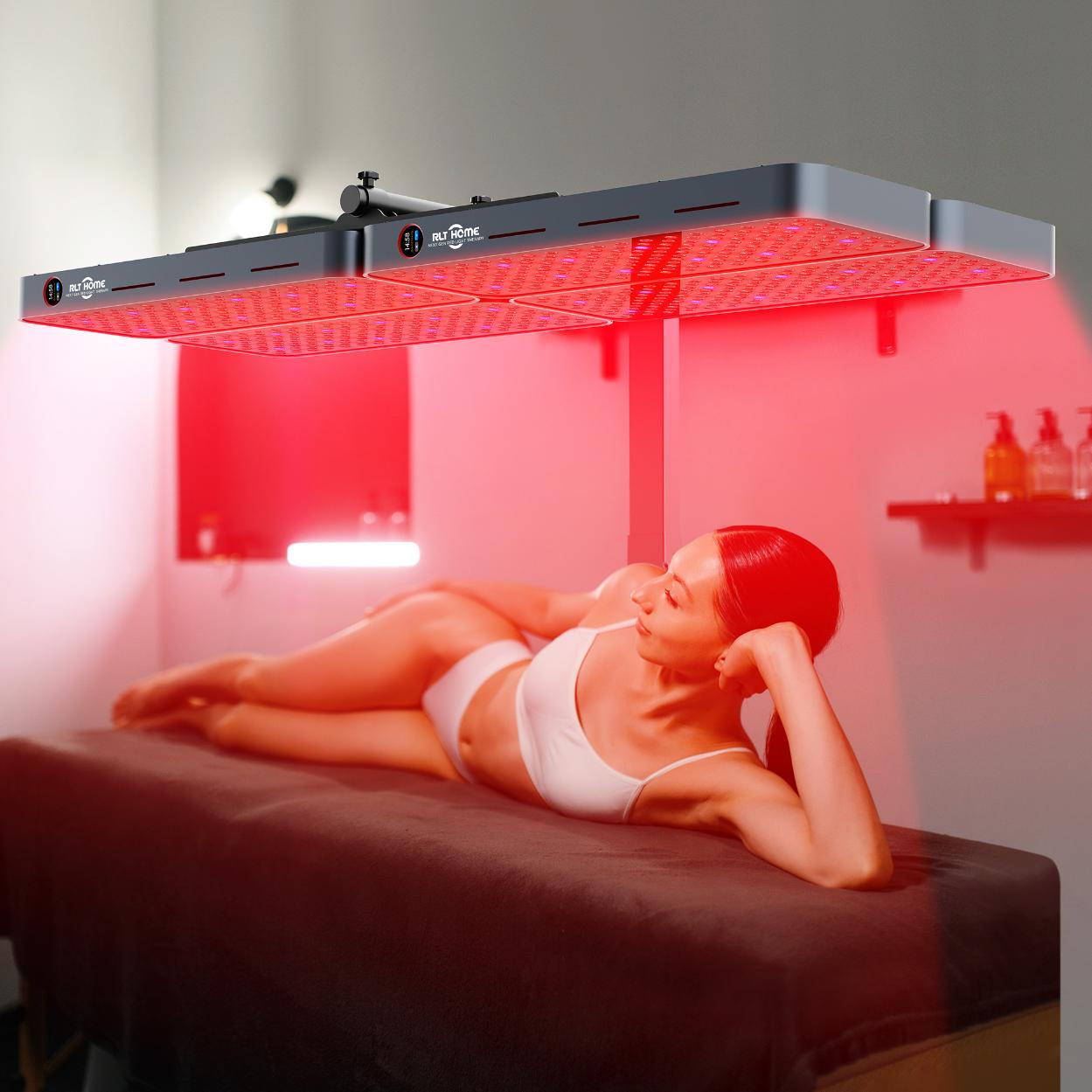
The honest read on multi-panel arrays is consistent across brands. Connecting more panels increases coverage area. Not the intensity reaching any single body part. Mitochondrial activation is a systemic effect. So the additional surface area does not translate into proportionally faster results.
At the top of the MegaX range, around $3,000 with stand, the price gap to the RLT Home Total Spectrum Elite at $4,595 is about $1,600. With code TOP10, the Elite drops to $4,319. Narrowing the gap to roughly $1,300.
For that premium the RLT Home buyer gets 864 LEDs in a single 65-inch panel. Versus up to 1,200 across multiple Mito panels. The published 14 percent allocation to 1064nm. The motorized electric stand. And the personalised usage plan.
The Mito MegaX still wins on raw LED count. And on dollars per LED. Which is a fair concession to make.
Compare Full Pricing With All Accessories Included
See complete pricing including stands, accessories, and trial terms. RLT Home includes motorized electric stand on Ultra and Elite. Use code TOP10 for 6% off RLT Home panels.
Who Should Choose Mito Red Light?
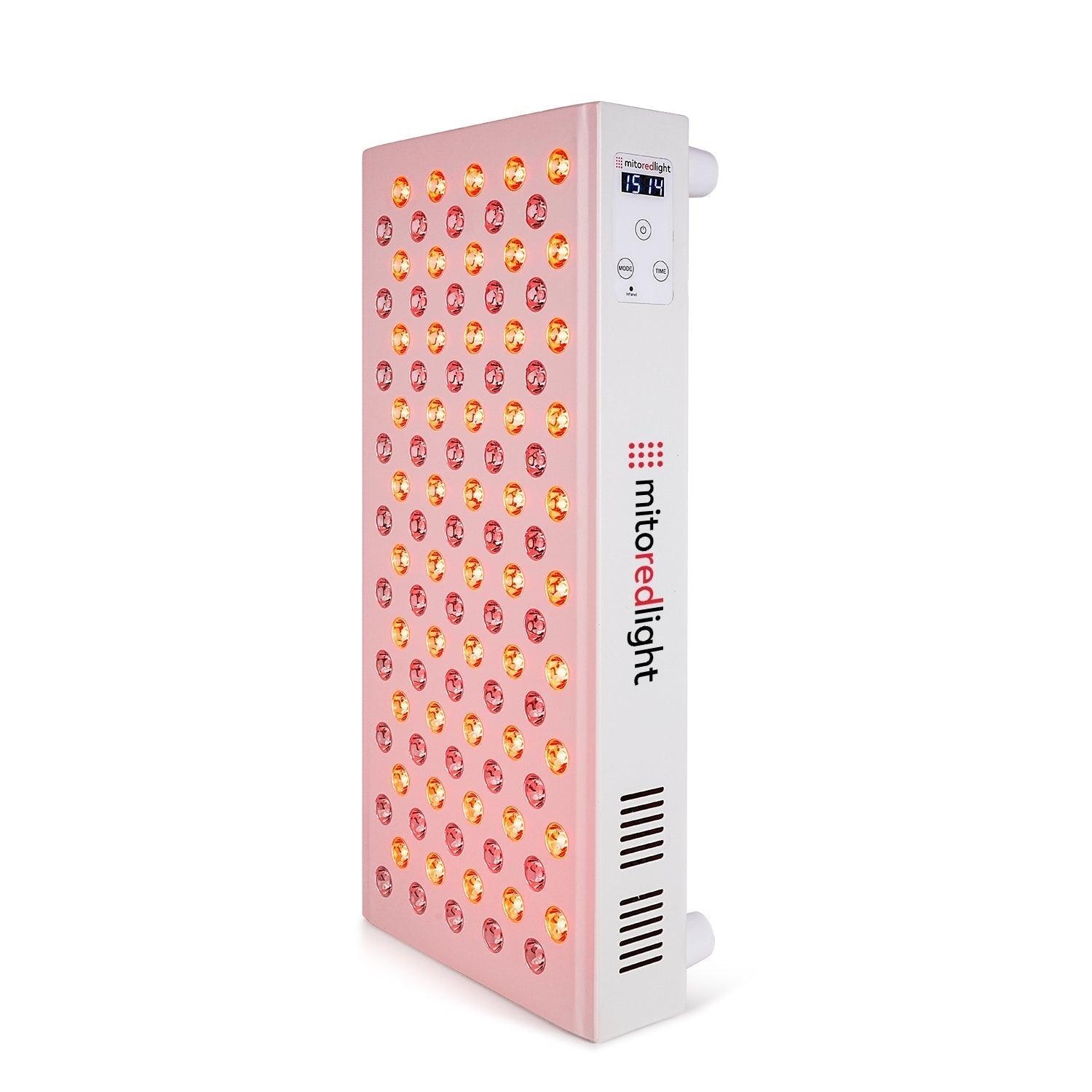
Best Fit for Budget-Tier Buyers and App Users
- Want the lowest entry price for a full-body single panel ($1,299 for the 1500X)
- Prefer dual-chip LED design and the even distribution it produces on the skin surface
- Value app control with session and data tracking (on MitoPRO X and MitoADAPT)
- Are comfortable assembling a 2-panel stack on a manual stand for full-body coverage
- Are primarily targeting surface and shallower benefits with 660 and 850nm dominant output
- Do not require 1064nm deep infrared for joint, brain or deep tissue goals
Who Should Choose RLT Home?
Best Fit for Deep-Wavelength Users and Support Seekers
- Want the widest deliberately-tuned spectrum, including 14 percent at 1064nm for deep tissue, joint and brain support
- Want a single full-body panel they can lie under, with a motorized electric stand included
- Value a free personalised weekly usage plan rather than figuring out programming themselves
- Want everything in the box at the purchase price: motorized stand, two kinds of eye protection, free insured shipping
- Want the lowest-risk trial with 60 days, no restocking fee, and free insured return shipping
- Care about privacy with no app and no data tracking
- Prefer marketing that uses factual regulatory language, FDA-registered, rather than medical-grade
The Verdict: Winner and Runner Up
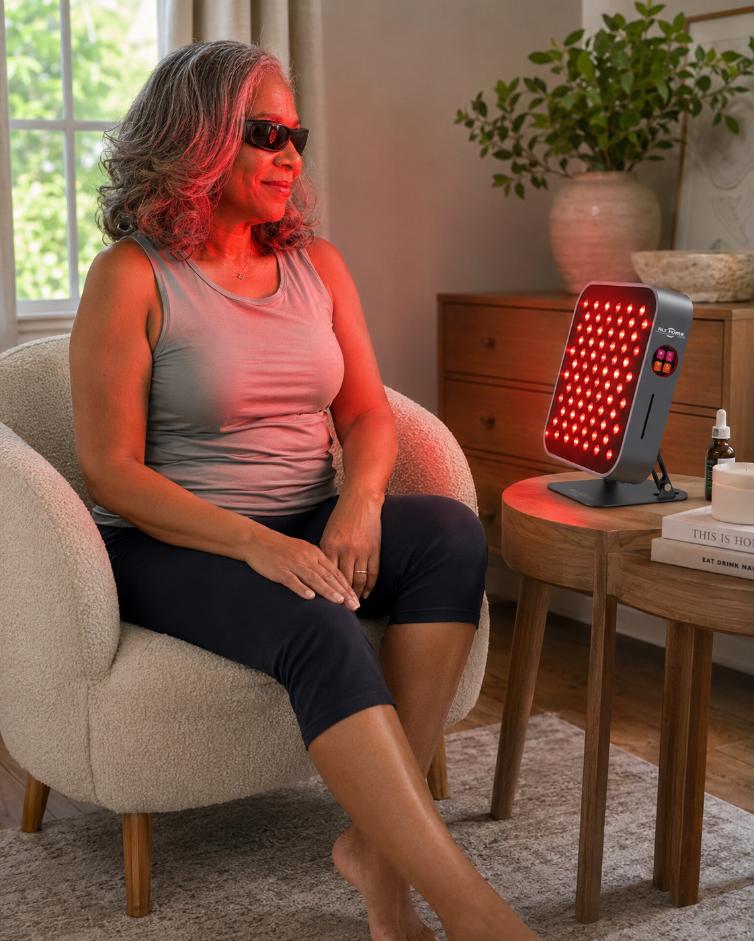
When the comparison is run on the data, RLT Home takes the overall win. Mito Red Light earns a credible runner-up spot for a specific kind of buyer. RLT Home takes the broader, more transparent comparison. Mito takes the budget-tier and dual-chip-fans niche where its philosophy genuinely fits.
🏆 Winner: RLT Home – For Most Buyers
For buyers who want the deepest wavelength coverage, RLT Home is the stronger overall choice. Including 14 percent at 1064nm. A denser single-chip LED array. Spectrometer-verified power. Single-panel full-body coverage. A motorized electric stand included. Two sets of eye protection.
A free personalised weekly usage plan. A true no-restocking-fee 60-day trial with free insured return shipping. And privacy-by-design with no app and no data tracking.
That edge widens with the TOP10 affiliate code. Adding 6% off at checkout drops the RLT Home Total Spectrum Max to $1,687. The RLT Home Total Spectrum Ultra to $2,721. And the RLT Home Total Spectrum Elite to $4,319.
This narrows the gap with Mito Red Light’s stacked or multi-panel full-body builds to just a few hundred dollars. While every RLT Home advantage stays on the table.
For an even broader view across all the top red light therapy brands compared side by side, see the full ranking of the best red light therapy panels.
🥈 Runner Up: Mito Red Light – For Budget-First Buyers and Dual-Chip Fans
For buyers who specifically value the lowest entry price for a full-body single panel, Mito Red Light’s panels are the better fit. The dual-chip TruDUAL design philosophy. App-based session tracking on MitoPRO X and MitoADAPT. And a three-series lineup that spans every price tier.
Buyers focused on surface-level work and shallower wavelengths will find Mito a strong value choice. Those who do not need 1064nm deep infrared.
Both brands back their devices with three-year warranties and 60-day trials. The right choice ultimately comes down to which set of priorities matches the buyer’s situation.
Make Your Choice With 60-Day Risk-Free Trials
Both brands offer 60-day trials with three-year warranties. RLT Home includes free insured return shipping and motorized electric stands. Use code TOP10 for 6% off RLT Home panels.
Keep comparing. See also the Mito Red Light review and BON CHARGE vs RLT Home, and Infraredi vs RLT Home, and the Joovv review, Bestqool vs RLT Home, RLT Home Total Spectrum review, and Infraredi review.
Frequently Asked Questions

Is Mito Red Light really a “medical-grade” device?
Every red light therapy panel sold in the US is FDA-registered. Registration is a listing, not a performance classification. No home red light panel currently holds a medical-grade status.
Mito Red Light is not alone in using the medical-grade phrasing. But it is worth understanding what the term does and does not mean. Both Mito Red Light and RLT Home hold the exact same FDA listing. FDA-registered. The brands differ only in how they describe that listing in their marketing.
Does RLT Home really publish a per-wavelength density percentage?
Yes. RLT Home publishes the exact percentage of LEDs allocated to each of its seven wavelengths. For every device in the Total Spectrum series.
The Total Spectrum Max and Elite allocate 14 percent to 1064nm and 19 percent to 810nm. These are among the highest deep near-infrared allocations on the market.
Which is better for deep tissue, joint pain, and brain support?
The wavelengths that reach deepest are 810nm, 830nm, and 1064nm. RLT Home’s published density gives all three real allocations.
No Mito Red Light panel carries 1064nm at all. The deepest band in the Mito lineup is 940nm. Available only on the MitoADAPT series. For deep-penetration goals, RLT Home delivers more output where it matters.
What does single-chip versus dual-chip LED actually mean for results?
Single-chip LEDs produce a cleaner wavelength peak. They deliver full power to one band. Which means deeper penetration per wavelength. RLT Home uses single-chip LEDs.
Dual-chip LEDs split power between two wavelengths in one diode. This produces a more uniform skin-surface distribution but shallower depth per band. Mito uses TruDUAL dual-chip LEDs.
For surface-level goals, the dual-chip distribution argument carries some weight. Surface includes skin, mood, and fine lines. For depth-oriented goals, single-chip wins. Depth includes joints, brain, and deep tissue. Because mitochondrial activation is systemic and depth matters more than even surface spread.
Which has the better trial and return policy?
Both offer 60 days and no restocking fee. Which is a tie on those two factors.
RLT Home includes free insured return shipping in the trial. Mito Red Light makes return shipping the customer’s responsibility. Unless the optional paid “Free Returns & Package Protection” was added at checkout. For a stand-equipped full-body system, return shipping can run to 0 each way.
Can either panel be paid for with HSA or FSA funds?
Both brands’ devices are typically HSA and FSA eligible. For buyers with a qualifying condition. RLT Home explicitly partners with TrueMed for HSA and FSA payment.
Always confirm with your provider before purchase. To ensure eligibility for your specific plan and condition.
Conclusion
Both Mito Red Light and RLT Home build legitimate red light therapy panels. Backed by three-year warranties and 60-day trials. The choice between them comes down to priorities.
Mito Red Light offers a lower entry price. Three series spanning every budget. Dual-chip TruDUAL LEDs. And app-based tracking on the bestseller and flagship lines.
RLT Home offers transparent published wavelength density. Single-chip LEDs with deeper per-band penetration. 14 percent at 1064nm deep infrared which no Mito panel carries. Full-body single panels with motorized electric stands included. And a free personalised usage plan from the science team.
For buyers prioritizing deep-wavelength effectiveness, RLT Home’s documented allocations deliver more therapeutic output where it counts. Particularly for joint pain, recovery, or brain support. RLT Home’s documented 14 percent allocation to 1064nm and 19 percent to 810nm.
For buyers prioritizing lowest entry price or dual-chip surface-level distribution, Mito Red Light’s approach may align better with their needs.
On balance, the data favors RLT Home for most buyers. The TOP10 affiliate code adds 6% off RLT Home. This further sharpens the value gap. Mito Red Light remains the right pick for buyers committed to budget-tier pricing or dual-chip design.
The right device ultimately depends on which profile above matches the buyer’s situation.
For the broader picture across all the top red light therapy panels compared side by side, see Red Light Therapy Top 10’s full ranking.
Start Your Red Light Therapy Journey Today
Both brands offer risk-free 60-day trials with three-year warranties. RLT Home wins on wavelength depth (1064nm), motorized electric stand, and personalized support. Mito Red Light offers budget-friendly entry pricing. Choose based on your specific health goals and budget. Use code TOP10 for 6% off RLT Home panels.
Important Medical Disclaimer: This article is general wellness information and does not constitute medical advice. Speak with a qualified healthcare professional before starting any new therapy, particularly if you have cancer, are pregnant, or are managing a serious health condition.