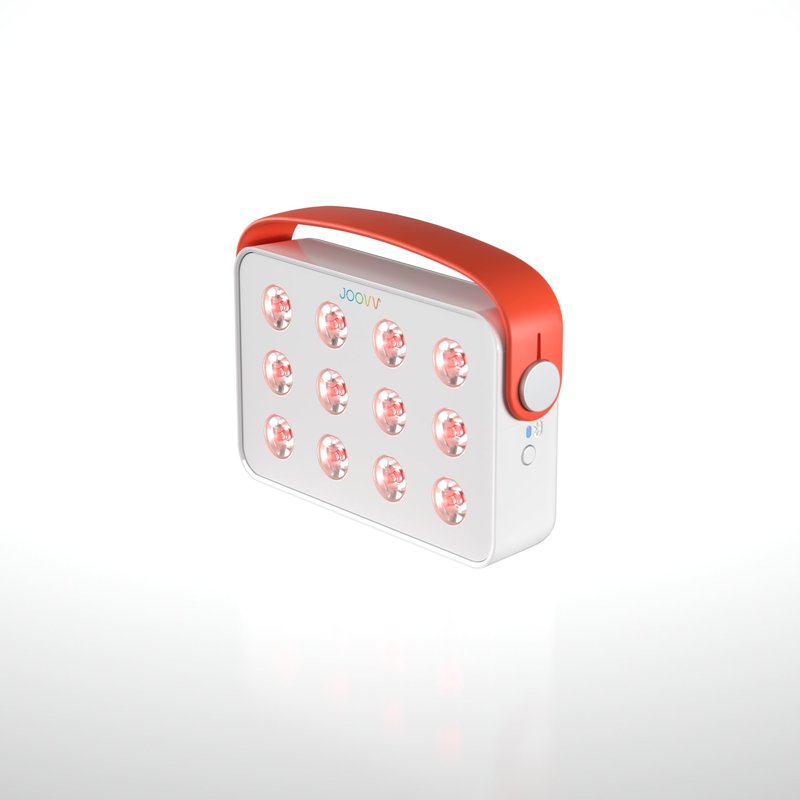
Best Cordless Red Light Therapy Handhelds: 10 Brands Compared (2026)
10 Cordless Handhelds Ranked on 14 Criteria
A cordless handheld has a built-in battery and finishes a session away from a wall socket. That rules out several products sold as “portable” (Bestqool BQ40, Red Light Rising Target Light 2.0, Red Light Man Infrared Mini, Novaa Light Pad), plus strap-on wearables such as Kineon MOVE+ and FlexBeam and facial wands, which are a different product class. That left 23 confirmed cordless handhelds; the ten with enough published data are scored here on the same 14 criteria as our 18-brand panel ranking, each out of 10 for a total out of 140. One warning: almost every irradiance figure in this category is a manufacturer claim. Where an independent reading exists we show it beside the claim, and where a brand publishes its own spectrometer readings at stated distances, as RLT Home does, we label them brand-commissioned.
Ranking criteria
We compared:
- Wavelengths: how many distinct red and near-infrared bands the device emits, and whether they are the well-studied ones (630 to 670 nm, 810 to 850 nm, 940 nm, 1064 nm).
- LED array: LED count, chips per LED, beam angle and how densely the emitters are packed over the treatment face.
- Irradiance: what the maker claims, whether the claim is tied to a distance and an instrument, and what any independent measurement found.
- Battery: stated capacity, sessions per charge and energy delivered per session, measured runtime where one exists, and charge time. A higher-output array needs fewer minutes per dose, so minutes alone are not the whole story.
- Portability: weight, dimensions, whether a case, stand or strap is included, and whether the pack is under airline carry-on limits.
- Modes: timers, selectable wavelengths, pulsing frequencies, intensity control and app features.
- Build: shell material, thermal protection, child lock, eyewear in the box, flicker and EMF statements.
- Regulatory: what the brand actually publishes versus what its badges imply. A plain statement of FDA status scores the baseline, a published registration number or a named third-party safety certification adds a point, and a badge that implies clearance or certification the brand does not have removes one.
- Warranty: length of cover; battery devices age faster than mains panels, so this matters more here.
- Trial: return window, whether a refund is full, and who pays return shipping or a restocking fee.
- Reviews: the brand’s review record on third-party review sites, or community sentiment where no review base exists, scored at brand level as on our panel ranking, plus independent hands-on coverage of the device; not star counts on the brand’s own page.
- Support: brand track record, documentation quality, financing and HSA/FSA eligibility, recall handling.
- Delivery: stock status at the time of review, shipping cost, dispatch region and expected arrival.
- Value: what the current price buys in wavelengths, chips, battery and warranty compared with the rest of the field.
RLT Home, Mito Red Light, Vital Red Light, PlatinumLED, Rouge, Light Path LED, Joovv, Bontanny, Hooga and Lumebox reviewed.



Final Scores and Rankings
Each cell scored out of 10.
| Rank | Brand | Score /140 | Wavelengths | LED array | Irradiance | Battery | Portability | Modes | Build | Regulatory | Warranty | Trial | Reviews | Support | Delivery | Value |
|---|---|---|---|---|---|---|---|---|---|---|---|---|---|---|---|---|
| 🥇 | RLT Home | 105 | 10 | 9 | 9 | 7 | 7 | 8 | 8 | 7 | 5 | 8 | 9 | 6 | 5 | 7 |
| 🥈 | Mito Red Light | 100 | 8 | 7 | 7 | 7 | 6 | 7 | 6 | 7 | 7 | 8 | 8 | 7 | 7 | 8 |
| 🥉 | Vital Red Light | 93 | 7 | 7 | 5 | 8 | 6 | 5 | 7 | 4 | 8 | 5 | 9 | 6 | 7 | 9 |
| 4 | PlatinumLED | 86 | 5 | 4 | 3 | 7 | 8 | 9 | 8 | 6 | 8 | 6 | 5 | 7 | 6 | 4 |
| 5 | Rouge | 84 | 5 | 6 | 7 | 6 | 8 | 4 | 6 | 4 | 5 | 8 | 7 | 6 | 4 | 8 |
| 6 | Light Path LED | 83 | 7 | 8 | 6 | 6 | 4 | 8 | 6 | 6 | 7 | 2 | 8 | 6 | 3 | 6 |
| 7 | Joovv | 81 | 5 | 6 | 8 | 4 | 6 | 7 | 8 | 7 | 5 | 5 | 4 | 7 | 6 | 3 |
| 8 | Bontanny | 80 | 7 | 7 | 6 | 6 | 7 | 3 | 5 | 6 | 8 | 2 | 4 | 4 | 6 | 9 |
| 9 | Hooga | 76 | 5 | 6 | 6 | 5 | 5 | 3 | 5 | 3 | 5 | 7 | 8 | 6 | 4 | 8 |
| 10 | Lumebox | 70 | 5 | 6 | 3 | 4 | 5 | 4 | 7 | 6 | 5 | 3 | 7 | 6 | 6 | 3 |
Our Picks
105/140

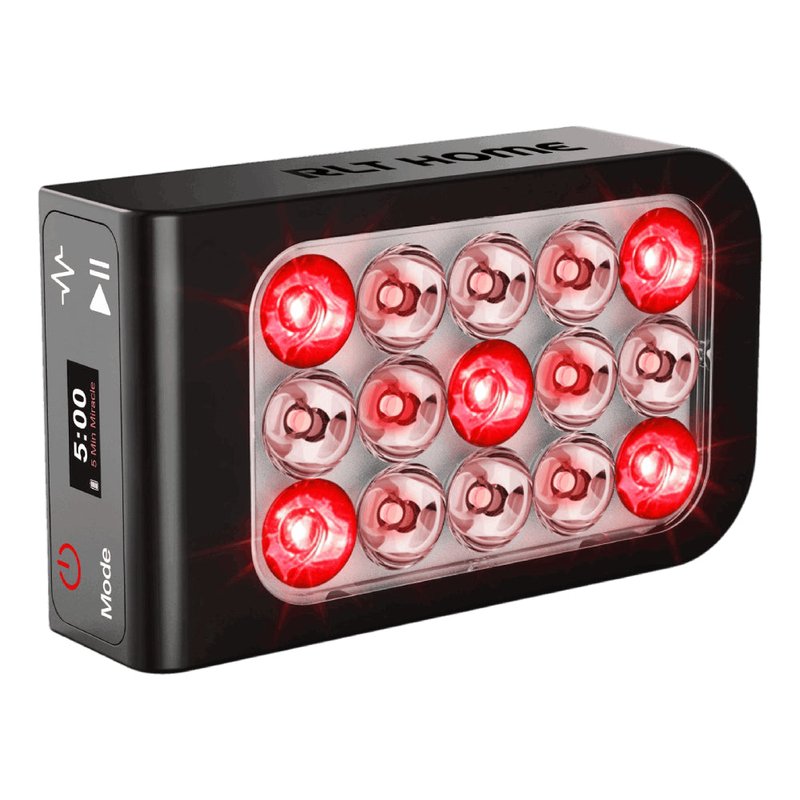
RLT Home Total Spectrum Focus
- $395 Fall Sale$595
- 7 wavelengths: 633, 660, 810, 830, 850, 940, 1064 nm
- 15 LEDs, 22 chips, gapless 5 x 3 array, 30 degree lenses
- Brand spectrometer readings: 115 / 69 / 42 / 30 mW/cm² at 3 / 6 / 9 / 12 in
- 10,000 mAh / 37 Wh battery, 16 sessions (80 min) per charge
- 1-year warranty, 60-day returns
100/140
Mito Red Light MitoPRO Mobile
- $349$399
- 5 wavelengths: 630, 660, 810, 830, 850 nm
- 12 dual-chip LEDs (24 chips), 60 degree beam
- Claimed 100 mW/cm² (solar) and 40 mW/cm² (spectroradiometer) at 3 in
- 3,000 mAh UL-listed battery, 2.5 to 3 h runtime
- 2-year warranty, 60-day returns
93/140
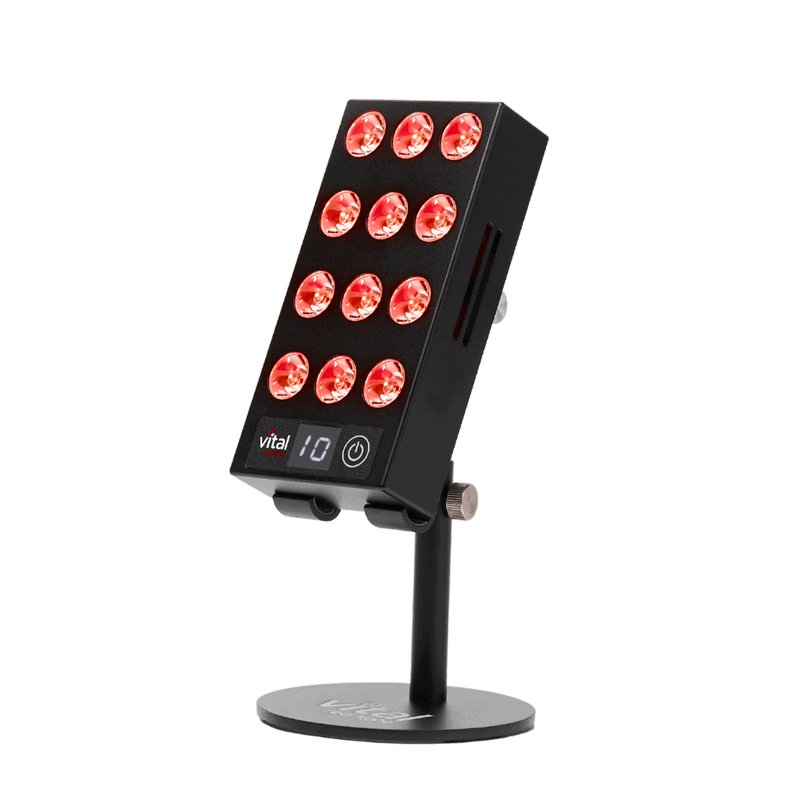
Vital Red Light Vital Charge
- $299
- 4 wavelengths: 630, 660, 810 or 830, 850 nm
- 12 x 5 W LEDs, 30 degree beam
- Claimed 150 to 210 mW/cm² (no distance stated)
- 10,000 mAh battery, 4 to 5 h claimed runtime
- 3-year warranty, 30-day returns
86/140
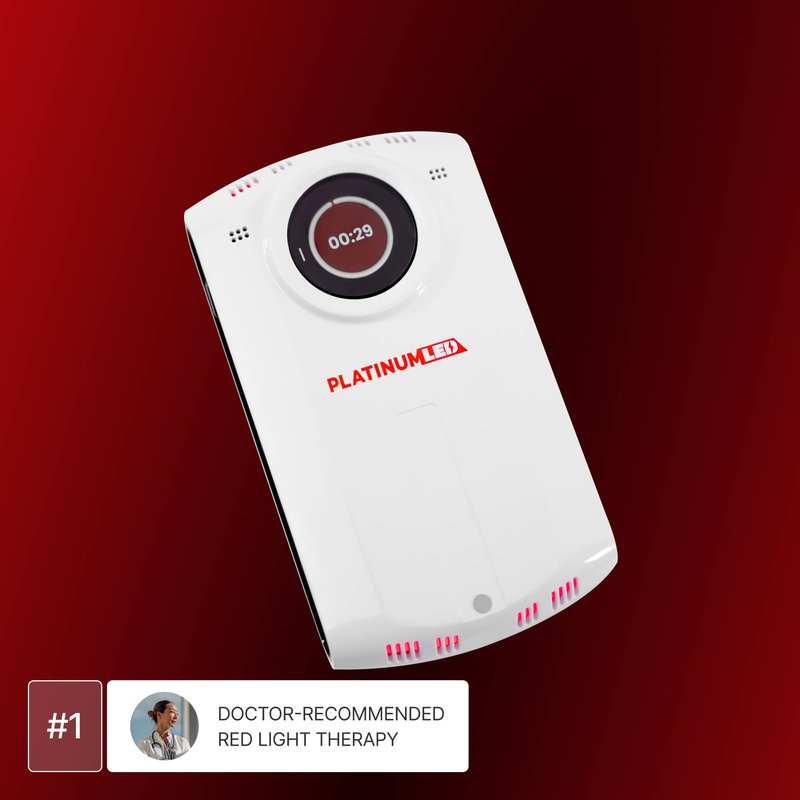
PlatinumLED BIOMAX GO
- $299
- 2 wavelengths: 660, 850 nm
- 12 single-chip LEDs (per independent review; maker does not state)
- Measured 7.9 mW/cm² at 6 in, 1.46 W total flux
- Up to ~3 h or 18 sessions, USB-C
- 3-year warranty, 60-day returns (fees apply)
84/140
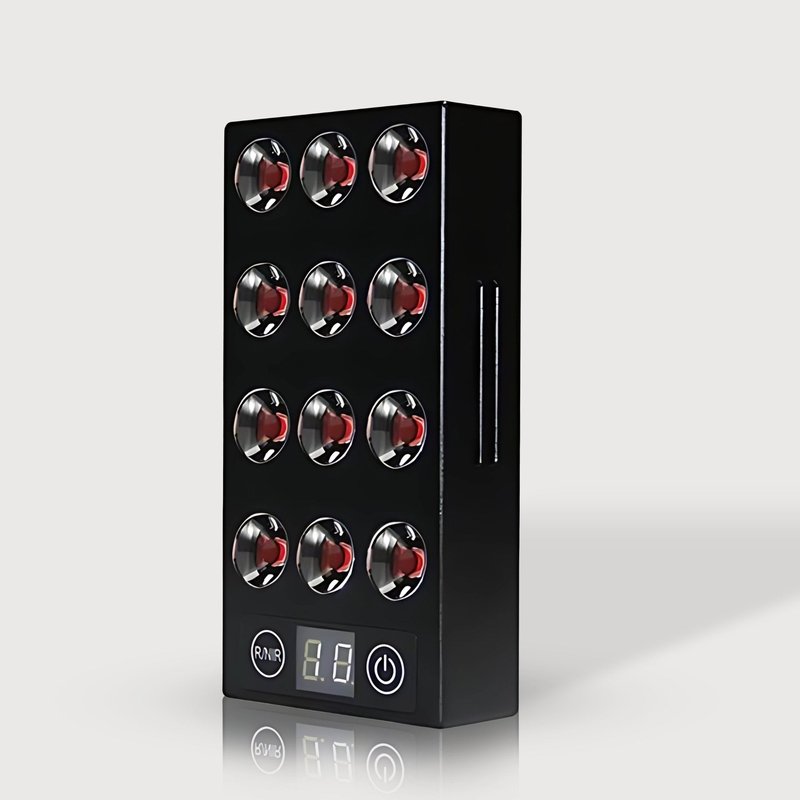
Rouge Nano
- CA$285CA$380
- 2 wavelengths: 660, 850 nm
- 12 dual-chip lamps (24 chips)
- Measured ~15 mW/cm² average at 6 in (2026 integrating sphere)
- 10,000 mAh claimed, >2 h or 10 to 12 sessions
- 1-year (or 3-year) warranty, 60-day returns
83/140
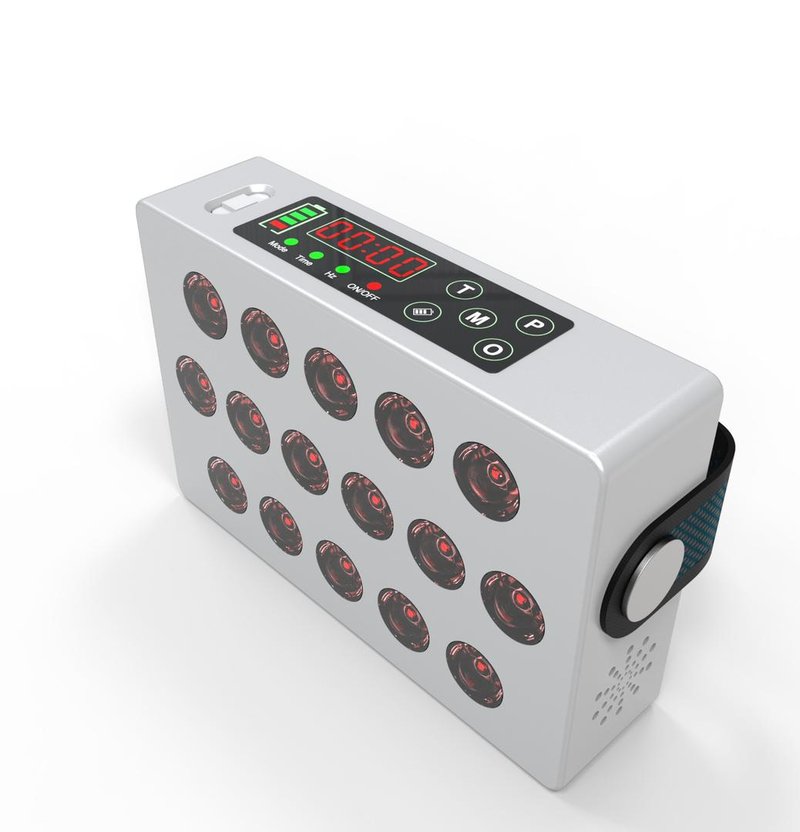
Light Path LED Diesel Mini (Red/NIR)
- $299$374
- 3 wavelengths: 670, 810, 940 nm
- 16 bulbs x 2 chips (32 chips), 30 degree beam
- Claimed 98 mW/cm² at 0 in, 78 to 82 at 1 in
- 2 h runtime, 3 h USB charge
- 2-year warranty, no return period stated
81/140
Joovv Go 2.0
- $549
- 2 wavelengths: 660, 850 nm
- 12 multi-die LEDs
- Measured 37.1 mW/cm² peak at 6 in (2021 spectrometer test)
- Battery capacity not stated; 1 h 15 min measured runtime
- 1-year warranty, 30-day returns
80/140
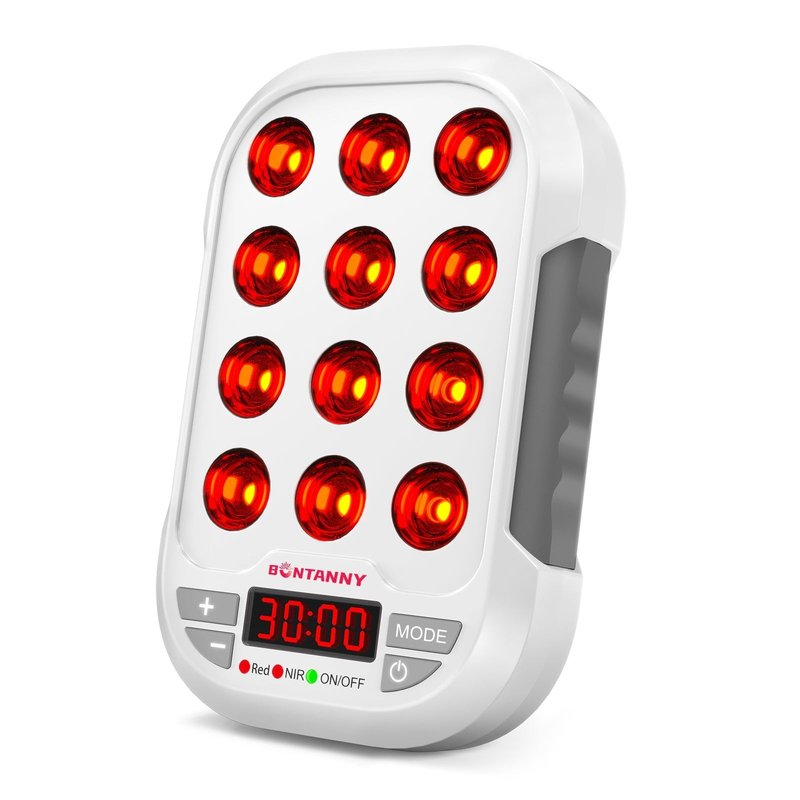
Bontanny BO-60
- $139$209
- 3 wavelengths: 660, 850, 1060 nm
- 12 triple-chip LEDs (36 chips), 60 degree beam
- Claimed 75 / 65 / 53 / 46 mW/cm² at 0 / 3 / 6 / 12 in
- 3,000 mAh, 2.5 to 3 h runtime
- 3-year warranty, no return period stated
Read full review
76/140
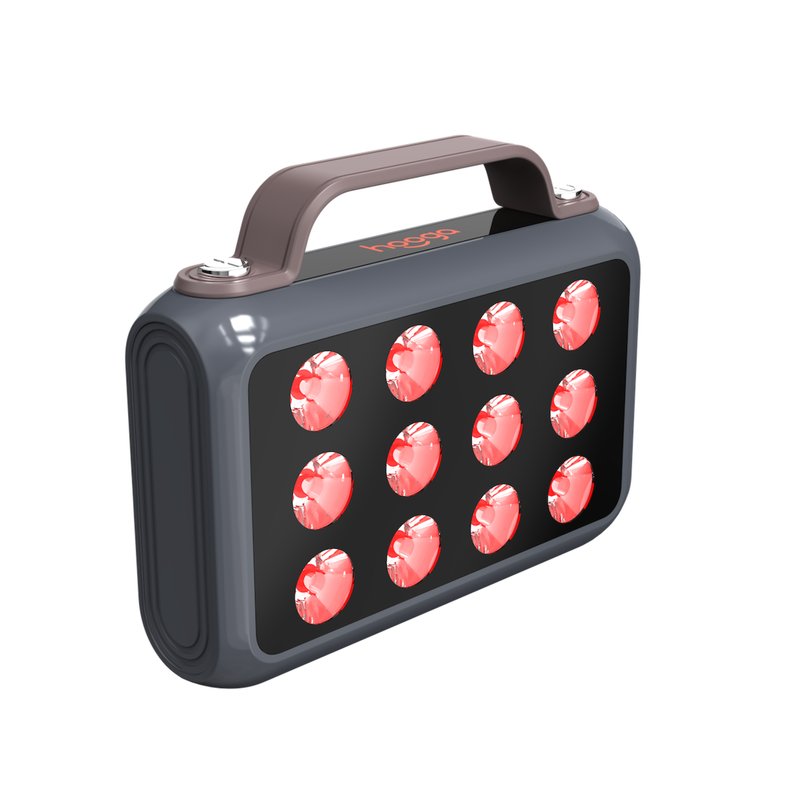
Hooga Charge
- $199
- 2 wavelengths: 660, 850 nm
- 12 x 5 W LEDs, 60 degree beam, 12 W draw
- Claimed 70 mW/cm² at 3 in, 40 at 6 in
- 10,000 mAh, about ten 10-min sessions, 8 h charge
- 1-year warranty, 60-day returns
70/140
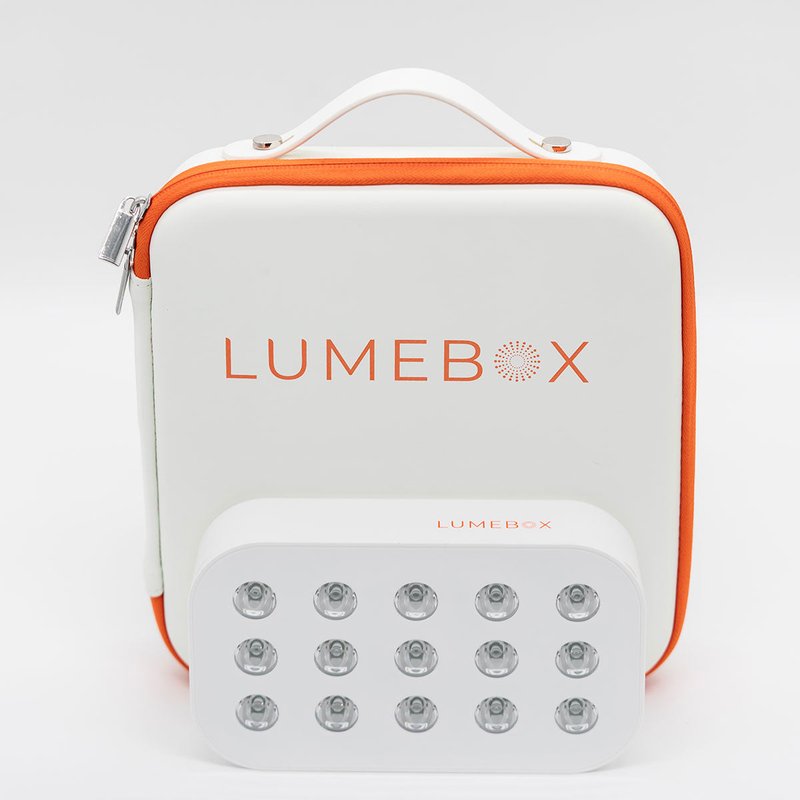
Lumebox 2.0
- $629
- 2 wavelengths: 660 and 850 nm from dual-chip bulbs; LED count not published
- No irradiance figure at any distance; radiant output 6.9 W stated in the manual
- Internal Li-ion battery, capacity and runtime not stated; 12-min cycle plus 3-min cool-down; 3 h charge
- 1-year warranty, 30-day returns with a 15% restocking fee, travel case and eyewear included
Read full review
Brand by Brand explanation
Each device below is scored on the same 14 criteria. Every irradiance figure is labeled as a manufacturer claim, a brand-commissioned measurement or an independent reviewer measurement, with the year and method of any measured number, because the two independent methods used in this category are not comparable (see Methodology). Prices are US list and sale prices as of October 2026.
1. RLT Home Review
Device Reviewed: Total Spectrum Focus (Cordless Handheld)
- Price: $595 list, $395 Fall Sale; free insured US shipping; HSA/FSA eligible; 0% financing
- Wavelengths: 633, 660, 810, 830, 850, 940, 1064 nm (7)
- LEDs: 15 LEDs, 22 chips (7 dual, 8 single), “5 W” LEDs, 30 degree lenses, gapless 5 x 3 array
- Claimed irradiance: 115 mW/cm² at 3 in, 69 at 6 in, 42 at 9 in and 30 at 12 in by spectrometer (brand-commissioned, linked as “Third-Party Lab Results”); 359 to 481 mW/cm² at the surface of every LED, with the spec table’s “>300” a floor and the manual’s 400 the approximate average
- Independent measurement: none by a reviewer; product live since 17 October 2026
- Battery and runtime: 10,000 mAh / 37 Wh Li-ion; 16 x 5-min sessions (80 min) per charge
- Charge time: about 4 h over USB-C at 5 V 2 A; no fast charging; adapter not in the box
- Weight: 0.52 kg (1.15 lb), 140 x 82 x 35 mm
- Modes and pulsing: four presets (5 Min Miracle all-7 continuous; Skin 633+660 continuous; Pain and Recovery 10 Hz; Deep and Brain 40 Hz); pulse “0 to 40 Hz adjustable”; fixed 5-min session; 42 C thermal cutoff; auto child lock
- FDA status: “FDA registered, 510(k) exempt general wellness device” in spec and FAQ, with an “FDA Registered Class II Medical Device” badge on the same page; CE, RoHS, FCC claimed; no numbers published
- Warranty: 1 year
- Returns: 60 days from delivery, full refund, no restocking fee, customer pays return shipping
- Wavelengths: 10/10 Seven bands against a field maximum of five. It is the only handheld with 810, 830, 850 and 940 nm together, and the only one at a true 1064 nm (Bontanny lists 1060).
- LED array: 9/10 15 LEDs and 22 chips packed edge to edge under 30 degree lenses, the densest array in the ten, with the chip map printed in the manual. Docked because “5 W” is nominal and total output is never reconciled.
- Irradiance: 9/10 The only cordless handheld that publishes spectrometer readings at four distances (115 mW/cm² at 3 in, 69 at 6 in, 42 at 9 in, 30 at 12 in) plus a 359 to 481 mW/cm² per-LED surface range; 69 at 6 in is the highest spectrometer figure in the field (Joovv 37.1 peak, 2021 method; Block Blue Light >45 claimed; Rouge ~15 average; BIOMAX GO 7.9). One point off because the figures are brand-commissioned and the third-party lab is not named on the page.
- Battery: 7/10 10,000 mAh / 37 Wh, the largest pack in the field, gives 16 five-minute sessions per charge at the highest measured output here, so each session delivers more energy than a longer-running, lower-output rival; still docked for the shortest continuous runtime (80 min), a 4-hour charge and no fast charging.
- Portability: 7/10 0.52 kg with a hard-shell case included, lighter than the Joovv, Vital and Mito but heavier than the BIOMAX GO and Bontanny. 37 Wh is under the airline carry-on limit.
- Modes: 8/10 Four presets, 10 Hz and 40 Hz pulsing, a user Pulse key and auto-off in every mode. Docked because every session is fixed at 5 minutes and there is no intensity control.
- Build: 8/10 Aluminum shell, 42 C thermal cutoff, automatic child lock, NIR goggles in the box. Not waterproof, and IEC 60601 or 62471 wording does not appear on the live site or in the manual.
- Regulatory: 7/10 FDA registered (510(k) exempt, general wellness) plus CE, RoHS and FCC stated, the fullest set of marks in the ten; one point off for a panel-boilerplate “Class II Medical Device” badge on the same page and no published numbers.
- Warranty: 5/10 1 year: half Mito’s and a third of Vital’s and PlatinumLED’s, for the second most expensive list price in the field after the Lumebox.
- Trial: 8/10 60 days from delivery, full refund, no restocking fee. You pay return shipping.
- Reviews: 9/10 Brand record: 4.9/5 across 290+ reviews on third-party review sites, the highest in this ten; the Focus itself launched 17 October 2026 and has no product reviews yet, so this score is the brand’s, not the device’s.
- Support: 6/10 A 48-page manual with a protocol per mode, a free personalized plan, HSA/FSA and 0% financing. No track record yet on a battery product.
- Delivery: 5/10 Free insured US shipping from California and Georgia, but first deliveries are expected 11 November 2026, and the spec table says US-only while the FAQ says worldwide.
- Value: 7/10 $395 on sale buys the most wavelengths and chips per dollar in the field. At the $595 list price it would be the second most expensive cordless handheld here, $46 above the Joovv and $34 below the Lumebox.
What buyers say: No reviews of the Focus itself, hands-on press or reviewer-run measurement exist yet, because it went on sale two days before this ranking was compiled and first units do not ship until 11 November. The Reviews score is therefore the brand’s: RLT Home holds a rating of 4.9/5 from more than 290 reviews on third-party review sites, the highest in this ten, scored at brand level as on our panel ranking. What also exists is the brand’s own spectrometer data at four distances, linked from the page as “Third-Party Lab Results” without naming the lab. We will update this section as soon as product reviews appear, and re-check Irradiance when a reviewer puts an instrument on a unit.
Overall Score: 105/140
On paper the Focus is a different class of array: seven wavelengths, 22 chips in a gapless block, the biggest battery in the category and pulsing modes only the Light Path matches, and it is the only handheld whose page publishes spectrometer readings at four distances, with 69 mW/cm² at 6 inches the highest figure in the field. The 14-criteria method rewards that with top scores for Wavelengths, LED array and Irradiance, ties for the top in Build and Trial, and a 9 for Reviews on the strength of RLT Home’s record on third-party review sites, the best brand rating in the ten. That puts it first at 105, five points clear of the Mito. Where it trails the Mito is warranty (1 year against 2), continuous runtime, charge time and product track record: the Focus itself has no reviews yet and ships on 11 November, and its brand-commissioned irradiance readings are not yet backed by a reviewer-run measurement or a named lab, which is why Irradiance stops at 9. We will re-check the score once independent reviewer measurements and reviews of the Focus itself exist.

2. Mito Red Light Review
Device Reviewed: MitoPRO Mobile (Cordless Handheld)
Read our full Mito Red Light review
- Price: $349 (list $399), free US shipping, HSA/FSA eligible
- Wavelengths: 630, 660, 810, 830, 850 nm (5)
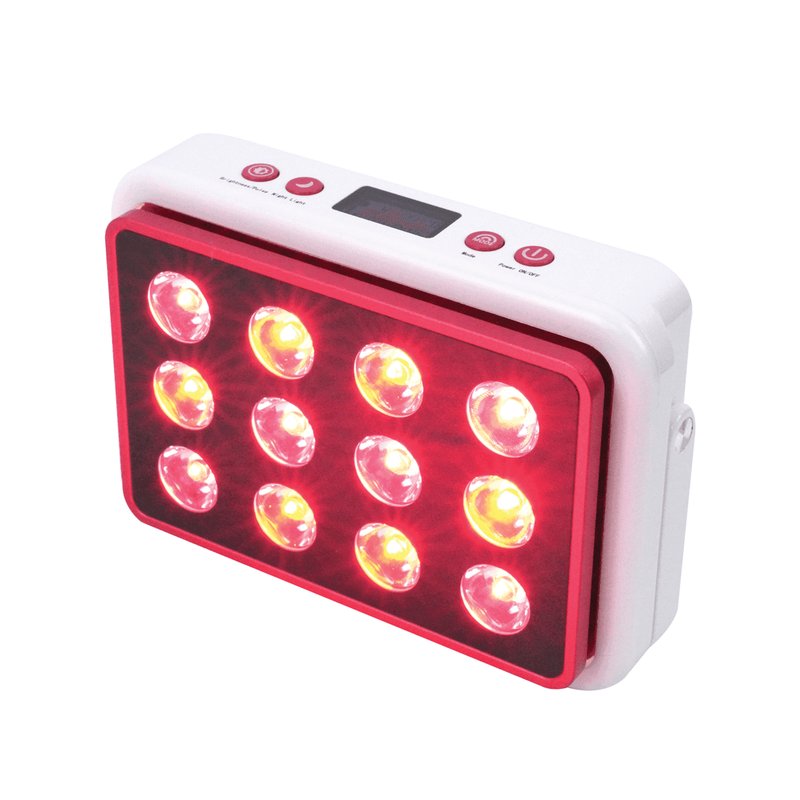
- LEDs: 12 TruDual lenses, 24 chips (12 red + 12 NIR), 60 degree beam; LED wattage not stated
- Claimed irradiance: 100 mW/cm² at 3 in by solar meter; 40 mW/cm² at 3 in by spectroradiometer; 150 mW/cm² at surface
- Independent measurement: none; Mito’s accredited lab results page covers panels only
- Battery and runtime: 3,000 mAh UL-listed cell, 2.5 to 3 h claimed
- Charge time: not stated; 9 V 2 A input (one reviewer quotes about 90 min)
- Weight: 1.5 lb (0.68 kg), 5.25 x 3.75 x 1.5 in
- Modes and pulsing: optional 10 Hz NIR pulsing, brightness control, low-blue ambient light, built-in stand and strap; no timer stated
- FDA status: “FDA Class II Registered”, registration #288202 in the footer; FCC, RoHS, CE claimed
- Warranty: 2 years
- Returns: 60-day money-back guarantee
- Wavelengths: 8/10 Five bands, second only to the Focus, and the only rival that carries both 810 and 830 nm alongside 850 nm.
- LED array: 7/10 12 dual-chip lenses give 24 chips under a 60 degree beam. Mito does not publish the LED wattage, which costs it a point.
- Irradiance: 7/10 Solar-meter, spectroradiometer and surface figures side by side, the only maker to show the instrument gap on its own page. But the comparison table header reads “6 inches” over 3-inch numbers, and no third party has measured it.
- Battery: 7/10 A smaller 3,000 mAh pack than most rivals, yet 2.5 to 3 h claimed. Charge time is not stated.
- Portability: 6/10 At 1.5 lb it is heavier than the Focus, Vital and Joovv. Stand and strap are built in; no case is listed.
- Modes: 7/10 Optional 10 Hz NIR pulsing, brightness control and an ambient low-blue mode. No session timer is stated.
- Build: 6/10 UL-listed battery and brightness control count in its favor. Docked because the brand’s Mito Mobile Super is under an open FDA Class 2 battery-fire recall; Mito says this product is not affected.
- Regulatory: 7/10 FDA registered with a published registration number (#288202), the same status as every other registered brand here; one point above baseline for publishing the number, since registration is not clearance. FCC, RoHS and CE are also claimed, and the footer still carries a “not evaluated by the FDA” line.
- Warranty: 7/10 2 years, double the Focus, Joovv, Hooga and Lumebox.
- Trial: 8/10 60-day money-back guarantee.
- Reviews: 8/10 4.5/5 on third-party review sites, on one of the largest review bases in the category. At device level, Outliyr’s “best handheld panel”, Light Therapy Insiders Tier A for travel, and the predecessor Mobile Flex was LTI’s number one handheld.
- Support: 7/10 Established brand with accredited lab data for its panels, and a recall handled with a free MitoPRO Mobile replacement or refund.
- Delivery: 7/10 In stock, free US shipping, HSA/FSA eligible.
- Value: 8/10 $349 for five wavelengths and a 2-year warranty is the best-rounded buy in the ten.
What buyers say: Independent reviewers rate this device highly. Outliyr names it the best handheld panel in its portable roundup, Light Therapy Insiders places Mito in its top travel tier, and the discontinued Mobile Flex that preceded it topped LTI’s instrument test of handhelds. The caution is that nobody has yet put a spectrometer on the current MitoPRO Mobile, so the 40 mW/cm² spectroradiometer figure is still Mito’s own number. Readers of older reviews should also note that the recalled Mito Mobile Super is a different product and is no longer sold.
Overall Score: 100/140
The MitoPRO Mobile takes second with no score below 6. It does not lead on wavelengths, array density or battery size, but it is the only handheld that is well-specified, honestly disclosed on irradiance, warranted for 2 years, returnable for 60 days and independently praised at the same time. It trails the Focus by five points, and the edge it keeps is the one a cautious buyer cares about: a 2-year warranty against 1, longer continuous runtime, a faster charge and a product with reviews behind it. If you want one cordless handheld you can buy today without caveats, this is it.

3. Vital Red Light Review
Device Reviewed: Vital Charge (Cordless Handheld)
Read our full Vital Red Light review
- Price: $299, no current discount, ships from Boca Raton, Florida
- Wavelengths: 630, 660, 810 (spec table) or 830 (body copy), 850 nm (4)
- LEDs: 12 x 5 W anti-flicker LEDs, 30 degree beam, “rated 60 W”, “light output up to 5 W”
- Claimed irradiance: 150 to 210 mW/cm² with no distance stated; a retailer page quotes 126 mW/cm² at 3 in
- Independent measurement: none
- Battery and runtime: 10,000 mAh; about 5 h, “+4 h” and “up to 4 h” all appear on the same page
- Charge time: not stated; 100 to 240 V adapter included
- Weight: 1.3 lb (0.6 kg), 5.8 x 3.8 x 1.5 in
- Modes and pulsing: red or NIR selectable, 10-min auto shut-off; no pulsing stated
- FDA status: “FDA-Cleared Technology*” and “Class II” with a footnote that status should be supported by the specific device’s 510(k); no K-number
- Warranty: 3 years in text (a badge image file is named “2_Year_Warranty”)
- Returns: 30 days, no restocking fee, customer pays return shipping
- Wavelengths: 7/10 Four bands is the second-widest spread after Mito and the Focus. The spec table and body copy disagree on whether the third is 810 or 830 nm.
- LED array: 7/10 12 x 5 W LEDs under a 30 degree beam, the same nominal LED rating as the Focus with seven fewer chips.
- Irradiance: 5/10 “150 to 210 mW/cm²” with no distance is a surface-style claim. The only distance-tied figure (126 at 3 in) sits on a retailer page, and there is no independent test.
- Battery: 8/10 10,000 mAh and the longest claimed runtime in the ten at 4 to 5 h. Docked for three different runtime figures on one page and no charge time.
- Portability: 6/10 1.3 lb with a stand and hand strap included. A carry case appears in the features list but not the box list.
- Modes: 5/10 Red or NIR selection and a 10-minute auto-off. No pulsing, no intensity control, no app.
- Build: 7/10 Aluminum body, anti-flicker LEDs and eyewear in the box. No thermal cutoff is stated.
- Regulatory: 4/10 An “FDA-Cleared Technology*” badge with no 510(k) number implies clearance the brand does not show, and Vital’s own footnote concedes the claim needs a 510(k) to stand behind it. Its registered status is the same as the others, so one point below baseline. No CE statement.
- Warranty: 8/10 3 years, the longest tier in the field, shared with PlatinumLED and Bontanny.
- Trial: 5/10 30 days, half the window Mito, RLT Home, Rouge and Hooga offer, and you pay return shipping.
- Reviews: 9/10 5/5 from 73 reviews on third-party review sites. At device level, Outliyr’s “best under $300”, stocked by Equinox, covered by The Good Trade. No instrument test anywhere.
- Support: 6/10 US company with a printed Red Light Guide in the box. No app, no personalized plan.
- Delivery: 7/10 In stock and shipping from Florida.
- Value: 9/10 $299 for four wavelengths, a 10,000 mAh battery and a 3-year warranty is the best spec-per-dollar in the ten.
What buyers say: Coverage is positive on value and runtime, and the brand holds an average of 5/5 from 73 reviews on third-party review sites. Outliyr makes it the pick under $300, Equinox stocks it, and The Good Trade has written it up. None of that coverage includes a measured irradiance figure, so the 150 to 210 mW/cm² claim remains untested, and the page’s conflicting runtime and wavelength statements mean buyers should confirm which third band their unit carries.
Overall Score: 93/140
The Vital Charge is the value leader. It beats the Focus on continuous runtime and warranty by a wide margin and costs $96 less at today’s sale prices. It loses on wavelengths, array density, modes and trial length, and its irradiance claim is less specific than Hooga’s or Bontanny’s. For a straightforward four-band handheld with the longest runtime and warranty on the list, it is the sensible pick.

4. PlatinumLED Review
Device Reviewed: BIOMAX GO (Cordless Handheld)
Read our full PlatinumLED review
- Price: $299, no discount
- Wavelengths: 660, 850 nm (2)
- LEDs: count and wattage not stated by the maker; 12 single-chip LEDs per Light Therapy Insiders
- Claimed irradiance: no numeric claim
- Independent measurement: 7.9 mW/cm² at 6 in and 1.46 W total flux, October 2026 averaging method (Light Therapy Insiders)
- Battery and runtime: capacity not stated; up to about 3 h or 18 sessions
- Charge time: not stated; USB-C
- Weight: 289 g per LTI; not stated by the maker
- Modes and pulsing: timer presets 15 and 30 min, adjustable 1 to 30 min, auto shut-off; intensity 0 to 100%; steady or pulsed; voice control; touchscreen; detachable stand
- FDA status: “low-risk general wellness”; “Medical Grade Certified IEC60601”; ETL; FDA not stated
- Warranty: 3 years
- Returns: 60 days; return shipping and a restocking fee are charged
- Wavelengths: 5/10 Two bands, 660 and 850 nm.
- LED array: 4/10 PlatinumLED does not publish count or wattage. LTI found 12 single-chip LEDs and 1.46 W total flux, the lowest optical output measured in the ten.
- Irradiance: 3/10 No numeric claim at all. The independent 2026 average of 7.9 mW/cm² at 6 in is the lowest measured figure here, and the reviewer judged it too weak for deep joints.
- Battery: 7/10 Up to about 3 h or 18 sessions on USB-C, helped by low power draw. Capacity is not stated.
- Portability: 8/10 289 g, the lightest mini-panel here, with a detachable stand. No case is listed.
- Modes: 9/10 1 to 30 minute adjustable timer, 0 to 100% intensity, steady or pulsed, voice control and a touchscreen: the richest control set in the category.
- Build: 8/10 “Medical Grade Certified IEC60601”, ETL listed, zero EMF.
- Regulatory: 6/10 General wellness positioning backed by IEC 60601 and ETL. No FDA registration or CE is stated.
- Warranty: 8/10 3 years.
- Trial: 6/10 60 days, but you pay return shipping and a restocking fee.
- Reviews: 5/10 About 3/5 on third-party review sites; the BIOMAX GO itself is weeks old with one independent review, which is lukewarm on power.
- Support: 7/10 Large, long-established panel brand.
- Delivery: 6/10 In stock. Shipping terms are not detailed on the page.
- Value: 4/10 $299 for the lowest measured irradiance in the ten.
What buyers say: The BIOMAX GO is new enough that there is a single hands-on review, and it is lukewarm. The reviewer liked the touchscreen, voice control, light weight and 3-year warranty, and did not like the output: 7.9 mW/cm² at 6 inches and 1.46 W of flux put it below every other measured handheld. PlatinumLED’s panel reputation is strong, but this is not a panel.
Overall Score: 86/140
The BIOMAX GO lands fourth at 86, two points ahead of the Rouge, carried by its controls, weight and warranty despite a brand record of about 3/5 on third-party review sites. It is the most comfortable handheld to live with, with the best controls, the lightest body and a 3-year warranty from a brand with real support depth. It is also the weakest at the one thing the category exists for, delivering light to tissue. Choose it for close-range skin and comfort work, not for deep joints.

5. Rouge Review
Device Reviewed: Nano (Cordless Handheld)
- Price: CA$285 (list CA$380); no USD price published, reviewers quote about $291 to $295; free shipping to US and Canada
- Wavelengths: 660, 850 nm (2)
- LEDs: 12 dual-chip lamps (24 chips); wattage not stated by Rouge (5 W per LTI)
- Claimed irradiance: >100 mW/cm² at 8 cm, with a lab test linked
- Independent measurement: about 15 mW/cm² 10-point average at 6 in and about 3 W total flux, integrating sphere, August 2026 (Light Therapy Insiders); peaks at 662 and 850.9 nm
- Battery and runtime: “10,000 mA” claimed; >2 h or 10 to 12 sessions; a 2021 unit shut off before 2 h; one reviewer lists it as USB-tethered, a conflict to resolve
- Charge time: not stated; USB-C; described as “somewhat slow”
- Weight: not stated (under 1 lb per Outliyr); 5.9 x 2.99 x 1.18 in
- Modes and pulsing: three modes (660 / 850 / both); timer and pulsing not stated
- FDA status: “FDA Certified” and “Health Canada certified” badges, with a footer describing general-wellness status under FDA guidance; CE not stated
- Warranty: 1 year in the spec table, “three-year warranty” in the marketing block
- Returns: 60 days, “no questions asked”
- Wavelengths: 5/10 Two bands, 660 and 850 nm.
- LED array: 6/10 12 dual-chip lamps for 24 chips. Rouge does not state LED wattage.
- Irradiance: 7/10 Until the Focus, the only handheld to claim a figure at a stated non-contact distance (>100 mW/cm² at 8 cm) with a lab link. LTI’s 2026 average of about 15 mW/cm² at 6 in is an average, not a peak, so it cannot be set against the Joovv’s 37.1.
- Battery: 6/10 10,000 mAh and over 2 h claimed, but the 2021 unit cut out before 2 h and one reviewer calls the device USB-tethered. Confirm before buying.
- Portability: 8/10 The slimmest body in the field at 5.9 x 2.99 x 1.18 in, metal shell, pouch or hard case included.
- Modes: 4/10 Three wavelength modes and nothing else: no timer, no pulsing, no intensity control stated.
- Build: 6/10 Solid metal body praised for durability. Goggles are not listed in the box.
- Regulatory: 4/10 “FDA Certified” and “Health Canada certified” badges imply a certification the brand does not have, and are contradicted by a footer describing general-wellness status; one point below baseline. No CE statement.
- Warranty: 5/10 The spec table says 1 year and the marketing copy says 3. LTI calls 1 year short for a battery device.
- Trial: 8/10 60 days, no questions asked.
- Reviews: 7/10 No third-party review-site base; Reddit and YouTube sentiment about 4/5, inferred. At device level, LTI’s “enduring personal favorite” handheld as of August 2026, Outliyr’s travel pick, and a regular recommendation on r/redlighttherapy.
- Support: 6/10 Canadian company with free US and Canada shipping. Charging is described as slow.
- Delivery: 4/10 Out of stock at capture despite being re-listed on 5 October 2026.
- Value: 8/10 CA$285 (roughly US$205 at our estimate) is the cheapest 12 x 5 W, 10,000 mAh handheld on the list. The US price needs confirming.
What buyers say: The Nano has the warmest reviewer following of any device here. Light Therapy Insiders calls it an enduring personal favorite and praises the metal body’s durability, Outliyr picks it for travel, and it recurs in community threads as the slim, pocketable option. The negatives are also consistent: slow charging, a 1-year warranty that reviewers consider short, and the fact that its measured 6-inch output is modest once a proper averaging method is applied.
Overall Score: 84/140
The Rouge Nano sits fifth at 84, two points behind the BIOMAX GO. It is the travel pick: slimmest, cheaper than the GO and backed by a 60-day no-questions return. It is held back by same-page contradictions on warranty and regulatory status, a modes list that stops at wavelength selection, a stock-out at review time and a price that is only published in Canadian dollars. Resolve the battery and US-price questions and it becomes a very easy recommendation.

6. Light Path LED Review
Device Reviewed: Diesel Mini Red/NIR (Cordless Handheld)
Read our full Light Path LED review
- Price: $299 (list $374, 20% off); Blue Combo variant $399
- Wavelengths: 670, 810, 940 nm (3); the Blue Combo adds 450 nm
- LEDs: 16 bulbs x 2 chips (32 chips), 30 degree beam; wattage not stated
- Claimed irradiance: 98 mW/cm² at 0 in; 78 to 82 mW/cm² at 1 in
- Independent measurement: ranked 3rd in LTI’s 2021 test, but the figure is not in the text and the reading included blue light; ran past 2 h in that test
- Battery and runtime: capacity not stated; 2 h claimed
- Charge time: 3 h over USB
- Weight: not stated (“bulky, heavy” per LTI); 6 x 4 x 1.5 in
- Modes and pulsing: timer; three modes (red / NIR / both); pulsing at 2.5, 10 and 40 Hz or off; “0 EMF”
- FDA status: “Class II Registered”; CE not stated
- Warranty: 2 years in the spec section (“up to 5-year” elsewhere on the page)
- Returns: none stated; 6-month Trade Up program only
- Wavelengths: 7/10 Three bands including 940 nm, which only the Focus also carries. The Blue Combo adds 450 nm for $100 more.
- LED array: 8/10 16 bulbs with 2 chips each for 32 chips under a 30 degree beam, second only to the Bontanny on published chip count and ahead of the Focus on raw total.
- Irradiance: 6/10 98 mW/cm² at contact and 78 to 82 at 1 inch, with distances stated. LTI ranked it 3rd in 2021, but the published text gives no figure and the reading included blue light.
- Battery: 6/10 2 h runtime and a 3 h USB charge; capacity not stated. It ran past 2 h in LTI’s test, one of the few handhelds to beat its claim.
- Portability: 4/10 6 x 4 x 1.5 in with the weight field left blank. LTI called it bulky, heavy and uncomfortable for 20-minute sessions. No case.
- Modes: 8/10 Three modes, a timer and pulsing at 2.5, 10 or 40 Hz, the fullest pulsing menu alongside the Focus.
- Build: 6/10 “0 EMF” and goggles included. Nothing is said about thermal protection.
- Regulatory: 6/10 “Class II Registered”; no CE statement and no registration number.
- Warranty: 7/10 2 years in the spec section. The page elsewhere says “up to 5-year”, which it should reconcile.
- Trial: 2/10 No return period is stated anywhere. The only exit is a 6-month Trade Up program.
- Reviews: 8/10 4.8/5 from 92 reviews on third-party review sites. At device level, 3rd in LTI’s 2021 handheld test, and Light Path torches sit in LTI’s Tier A for travel.
- Support: 6/10 Established US brand, docked for repeated renaming (Mini, Diesel Torch, The Torch) that makes manuals and reviews hard to match to a product.
- Delivery: 3/10 The Red/NIR variant was sold out at capture.
- Value: 6/10 $299 on sale for three wavelengths and 32 chips is fair; $374 list is not.
What buyers say: Light Therapy Insiders placed the Mini third of seven handhelds in its instrument test and noted it was one of the few to run past its claimed 2 hours. The same review called it bulky and heavy enough to be uncomfortable through a 20-minute session. Beyond LTI the device has little written about it, partly because Light Path has renamed it more than once.
Overall Score: 83/140
The Diesel Mini is a hardware-first device: more chips than anything except the Bontanny, a 940 nm band, 2.5/10/40 Hz pulsing and a 2-year warranty. It is held to sixth by policy and logistics. There is no stated return window, the weight is unpublished and reviewers find it heavy, and the variant we scored was out of stock. If Light Path adds a trial period this moves up several places.

7. Joovv Review
Device Reviewed: Go 2.0 (Cordless Handheld)
- Price: $549, no discount; charging dock $150 extra; HSA/FSA eligible
- Wavelengths: 660, 850 nm (2)
- LEDs: 12 multi-die LEDs; “light output up to 5 W”; LED wattage not stated
- Claimed irradiance: >100 mW/cm² with no distance stated
- Independent measurement: 37.1 mW/cm² peak at 6 in, Hopoo spectrometer, 2021 peak-reading method (Light Therapy Insiders)
- Battery and runtime: capacity not stated; up to 2 h claimed; 1 h 15 min measured, shutting down with 20% showing
- Charge time: about 5.5 h; 9 V AC adapter; runs on battery or AC
- Weight: about 0.6 kg (1.32 lb), 5.75 x 3.75 x 1.47 in
- Modes and pulsing: 10-min session then forced 10-min cooldown; Recovery+ pulsing; Ambient mode; alarm clock; Bluetooth 5.0 app
- FDA status: “Class II Medical Device”; Intertek-certified to IEC 60601; no FDA number; CE not stated
- Warranty: 1 year
- Returns: 30 days
- Wavelengths: 5/10 Two bands, 660 and 850 nm. Adequate for skin and surface tissue, but the Focus has seven and Mito five at a lower price.
- LED array: 6/10 12 multi-die LEDs with “up to 5 W” total output. No per-LED wattage or beam angle is published.
- Irradiance: 8/10 The claim (“>100 mW/cm²”, no distance) is vague, but 37.1 mW/cm² peak at 6 in is the highest reviewer-run spectrometer reading of any handheld; the Focus’s brand-published 69 at the same distance is higher but not independent. Note it is a 2021 peak figure, not a 2026 average.
- Battery: 4/10 Capacity unstated, and the “up to 2 h” claim delivered 1 h 15 min in a timed test before shutting down with 20% still indicated. Recharge takes 5.5 h.
- Portability: 6/10 0.6 kg, fanless, travel case included. Mid-pack on weight.
- Modes: 7/10 Recovery+ pulsing, Ambient mode, alarm clock and a Bluetooth app. Each 10-minute session is followed by a forced 10-minute cooldown, which slows multi-area use.
- Build: 8/10 Intertek-certified to IEC 60601, cooldown protection, eyewear included and dual battery or AC operation.
- Regulatory: 7/10 FDA registered status is not stated on the page; “Class II Medical Device” wording plus a named Intertek IEC 60601 certification, with ISO 13485 reported by Outliyr. One point above baseline for the named third-party safety certification. No CE mark is stated.
- Warranty: 5/10 1 year on a $549 device.
- Trial: 5/10 30 days.
- Reviews: 4/10 About 3/5 on third-party review sites, the weakest brand record in the ten, despite being the most recognized name in red light therapy. At device level, LTI ranked it 4th of seven handhelds and Outliyr says competitors offer comparable or better specs for less.
- Support: 7/10 Large company, app support, HSA/FSA and Affirm financing.
- Delivery: 6/10 US shipping. The dock is a separate $150 purchase.
- Value: 3/10 $549 for two wavelengths and a 1-year warranty is the weakest value in the ten. The dock bundle saves $50.
What buyers say: Brand recognition carries the Go 2.0 a long way, and it is the one handheld with a strong independent output number. The criticisms are consistent: Light Therapy Insiders’ timed test found the battery delivered 62% of its claimed runtime, and Outliyr’s verdict is that rivals match or beat the specs for less money. The forced cooldown between sessions is a recurring complaint for anyone treating more than one area.
Overall Score: 81/140
The Joovv Go 2.0 lands seventh at 81, with the weakest brand review record in the ten (about 3/5 on third-party review sites) and a Value score of 3, the weakest here alongside the Lumebox. It has the best reviewer-measured output and the one named third-party safety certification in the group, and it is the only handheld here that runs from AC when the battery is flat. It is also the second most expensive on sale after the Lumebox, has the shortest measured runtime, and offers two wavelengths with a 1-year warranty. Buy it for the pedigree and the output; do not buy it for value.

8. Bontanny Review
Device Reviewed: BO-60 (Cordless Handheld)
Read our full Bontanny review
- Price: $139 (list $209)
- Wavelengths: 660, 850, 1060 nm (3)
- LEDs: 12 triple-chip LEDs (36 chips), 60 degree beam, 10 W “real power”
- Claimed irradiance: 75 mW/cm² at 0 in, 65 at 3 in, 53 at 6 in, 46 at 12 in; method not stated
- Independent measurement: none
- Battery and runtime: 3,000 mAh; 2.5 to 3 h claimed
- Charge time: not stated
- Weight: 0.88 lb; 5.9 x 3.8 x 1.3 in
- Modes and pulsing: timer referenced (“10 to 20 minute session”); modes and pulsing not stated; EMF 0.0 microtesla at 3 in
- FDA status: “FDA registered”, “third-party tested”; CE not stated
- Warranty: 3 years (FAQ)
- Returns: not stated
- Wavelengths: 7/10 Three bands including 1060 nm, the only handheld apart from the Focus to reach the 1064 nm region.
- LED array: 7/10 12 triple-chip LEDs for 36 chips, the highest maker-published chip count in the ten, under a 60 degree beam at a claimed 10 W.
- Irradiance: 6/10 One of two full distance curves in the field, with the Focus (75 / 65 / 53 / 46 mW/cm² at 0 / 3 / 6 / 12 in), but no method is stated and there is no independent test.
- Battery: 6/10 3,000 mAh for 2.5 to 3 h. Charge method and time are not stated.
- Portability: 7/10 0.88 lb, among the lightest here, at 5.9 x 3.8 x 1.3 in. No case is mentioned.
- Modes: 3/10 A timer is referenced. No wavelength modes, pulsing or intensity control are stated.
- Build: 5/10 EMF 0.0 microtesla at 3 in and 50,000-hour LEDs claimed. Box contents are not listed.
- Regulatory: 6/10 States FDA registration plainly with no inflated badge, the same status as the leaders; baseline. “Third-party tested” comes with no test documents, and there is no CE statement.
- Warranty: 8/10 3 years per the FAQ, matching Vital and PlatinumLED at less than half the price.
- Trial: 2/10 No return period is stated anywhere on the page.
- Reviews: 4/10 Appears only in Amazon-affiliate aggregators. No independent hands-on or instrument test.
- Support: 4/10 Amazon-tier brand; the product page blocked automated fetches, and documentation is thin.
- Delivery: 6/10 In stock.
- Value: 9/10 $139 for three wavelengths including 1060 nm, 36 chips and a 3-year warranty is the lowest price on the list by $60.
What buyers say: Very little that we can rely on. The BO-60 surfaces in Amazon-affiliate roundups but has not been reviewed hands-on or measured by anyone independent, and we found no community discussion of it. The spec sheet is more complete than the price suggests, which is exactly why it needs outside verification.
Overall Score: 80/140
The Bontanny BO-60 is the budget wildcard: the cheapest device here, the only one with a full distance curve for irradiance and a 3-year warranty, with a 1060 nm band that otherwise costs $395. It scores 3 or lower on Modes and Trial and 4 on Reviews and Support, because it states no return policy, publishes no modes and has no track record. Treat it as a low-risk experiment at $139, not as a long-term investment.

9. Hooga Review
Device Reviewed: Charge (Cordless Handheld)
- Price: $199, no discount; sold out at capture
- Wavelengths: 660, 850 nm (2)
- LEDs: 12 x 5 W (60 W rated, 12 W actual draw), 60 degree beam
- Claimed irradiance: 70 mW/cm² at 3 in; 40 mW/cm² at 6 in; method not stated
- Independent measurement: none for the Charge; Hooga’s Dot patch measured 45 to 68 mW/cm² at contact and 0.4 at 6 in against a higher claim
- Battery and runtime: 10,000 mAh; about ten 10-min sessions (roughly 100 min)
- Charge time: about 8 h over USB-C
- Weight: 1.3 lb; 5.9 x 3.9 x 1.3 in
- Modes and pulsing: none stated; one cooling fan; zero EMF at 6 in
- FDA status: not stated beyond a general wellness disclaimer
- Warranty: 1 year
- Returns: 60 days from delivery, return shipping deducted
- Wavelengths: 5/10 Two bands, 660 and 850 nm.
- LED array: 6/10 12 x 5 W LEDs under a 60 degree beam. Hooga is unusually honest that actual draw is 12 W, not the 60 W rating.
- Irradiance: 6/10 70 mW/cm² at 3 in and 40 at 6 in, with distances stated but no instrument. Hooga’s own Dot claim measured at roughly half when LTI tested it, which tempers confidence.
- Battery: 5/10 A 10,000 mAh pack that delivers only about ten 10-minute sessions and takes around 8 hours to recharge, the slowest charge in the ten.
- Portability: 5/10 1.3 lb with a cooling fan and no case listed.
- Modes: 3/10 No timer, modes or pulsing are stated.
- Build: 5/10 Fan cooling, zero EMF at 6 in and goggles included. Nothing on thermal cutoff or child lock.
- Regulatory: 3/10 Nothing is stated beyond a general wellness disclaimer.
- Warranty: 5/10 1 year.
- Trial: 7/10 60 days from delivery, with return shipping deducted from the refund.
- Reviews: 8/10 About 4.5/5 on third-party review sites. At device level, asked about repeatedly on r/redlighttherapy as the budget US pick, but no hands-on review was found.
- Support: 6/10 Established budget brand with a large catalog.
- Delivery: 4/10 Sold out at capture.
- Value: 8/10 $199 for a 12 x 5 W, 10,000 mAh unit with a 60-day trial.
What buyers say: The Charge is the device people ask about when they want a cheap US-brand handheld, and it comes up repeatedly in community threads for that reason. We found no hands-on or instrument review of it. The honest 12 W draw figure and distance-stated irradiance are points in Hooga’s favor; the 8-hour charge and absence of any modes are the complaints that would follow if more people had written about it.
Overall Score: 76/140
The Hooga Charge is a plain, cheap, honestly specified two-band handheld. It scores well on Value, Trial and brand Reviews and nowhere else above 6. The 8-hour recharge for 100 minutes of use, the lack of a timer or pulsing, a 1-year warranty and no regulatory statement keep it ninth. At $199 and in stock it is a reasonable first handheld; at review time it was neither in stock nor discounted.

10. Lumebox Review
Device Reviewed: Lumebox 2.0 (Cordless Handheld)
Read our full Lumebox review
- Price: $629, no discount; Lumebox Stand $59 sold separately
- Wavelengths: 660, 850 nm (2), both from each dual-chip bulb
- LEDs: count and wattage not stated by the maker; independent reviewers report 120 dual-chip LEDs; radiant output 5.4 W red, 6.1 W NIR, 6.9 W both (manual)
- Claimed irradiance: none; no mW/cm² figure at any distance on the site or in the manual, only “high irradiance” and “58% more red irradiance, 80% more near-infrared irradiance” than an unnamed portable
- Independent measurement: none by a reviewer with an instrument; community solar-meter readings of roughly 100 to 130 mW/cm² at contact are reported and are not comparable with spectrometer figures
- Battery and runtime: internal, non-user-serviceable Li-ion; capacity and runtime not stated; 12-min cycle followed by a mandatory 3-min cool-down; 6 h between sessions; 500 or more charge cycles
- Charge time: up to 3 h via a 9 V / 3 A adapter; the device will not operate while plugged in
- Weight: not stated; the brand describes it as “25% bigger than most handheld devices”
- Modes and pulsing: red, NIR or both; 6- and 12-min timer beeps; no pulsing
- FDA status: “FDA-registered”, with a “Class II Medical Device” badge; third-party tested to IEC electrical and optical safety standards; EMF 0.2 microtesla at 0 cm; CE not stated
- Warranty: 1 year (manual)
- Returns: 30 days from receipt; 15% restocking fee; customer pays return shipping
- Wavelengths: 5/10 Two (660 and 850 nm), the category minimum, matched by Joovv, Rouge, BIOMAX GO and Hooga.
- LED array: 6/10 The maker does not publish an LED count; reviewers report 120 dual-chip bulbs over a treatment area the brand calls 25% larger than most handhelds, so the array is large but undocumented.
- Irradiance: 3/10 No mW/cm² figure at any distance on the site or in the manual, the thinnest output disclosure in the ten; only radiant power (6.9 W combined) and an unnamed comparison claim.
- Battery: 4/10 Internal Li-ion with 500 or more cycles, but no capacity or runtime is stated, each 12-minute cycle is followed by a forced 3-minute cool-down, and the unit will not run while charging.
- Portability: 5/10 Travel case included, but weight and dimensions are not published and the brand itself describes the device as 25% bigger than most handhelds.
- Modes: 4/10 Red, NIR or both with a 6- and 12-minute timer; no pulsing and no presets.
- Build: 7/10 Third-party tested to IEC electrical and optical safety standards, EMF 0.2 microtesla at contact, protective eyewear in the box, comfort-grip accessory.
- Regulatory: 6/10 FDA registered, the same status as the other registered brands; the “Class II Medical Device” badge implies more than registration and no number is published.
- Warranty: 5/10 1 year, the shortest tier in the ten, stated only in the manual.
- Trial: 3/10 30 days from receipt with a 15% restocking fee and return shipping on the customer, the least generous stated return terms here.
- Reviews: 7/10 Widely reviewed and generally well regarded by independent reviewers and on third-party review sites, with a large installed base; no numeric brand rating is cited on our panel ranking.
- Support: 6/10 Clear manual with cool-down and spacing guidance, FAQ and adapter guidance for UK and Australian buyers; warranty page returned an error when checked.
- Delivery: 6/10 Ships from the US; international shipping is a flat $59.99 to Canada, Australia and the UK.
- Value: 3/10 $629 is the highest price in the ten, for two wavelengths, no published output figure, a 1-year warranty and a restocking fee.
What buyers say: Independent reviewers and third-party review sites are broadly positive about the Lumebox 2.0, praising its coverage, build and ease of use, and it has one of the largest installed bases of any handheld. The recurring criticisms are the price, the forced cool-down and the absence of any published output figure.
Overall Score: 70/140
The Lumebox 2.0 scores well on build and reputation and poorly on everything that depends on a published number: Irradiance 3, Battery 4, Trial 3 and Value 3. A single spectrometer figure at a stated distance, plus a runtime, would move it several places up this table.

Frequently Asked Questions
Everything you need to know about choosing the right cordless red light therapy handheld
Our Testing Methodology
Published Data, Gathered and Cross-Checked
This ranking is built from published data, gathered and cross-checked on 18 and 19 October 2026. For each device we read the manufacturer’s product page, its structured product feed, and its user manual where one is published (RLT Home’s 48-page Focus manual, for example, supplies the LED map, charge current and fast-charger warning that the product page does not). We captured list and sale prices, stock status, warranty, return terms and box contents at the same time, so the prices and stock notes above are a snapshot of mid-October and will change.
Independent Instrument Data
Independent instrument data in this category comes from a single source, Alex Fergus of Light Therapy Insiders, who has measured four current handhelds and is affiliated with several of the brands he tests. His 2021 roundup used a Hopoo spectrometer at 6 inches and recorded the peak reading as the sensor passed over the LEDs, giving the Joovv Go 2.0 37.1 mW/cm² and the Bon Charge Mini 7.5. In August 2026 he described the peak method as flawed and switched to a 10-point average with an integrating sphere, producing the Rouge Nano’s roughly 15 mW/cm² at 6 inches, and in October 2026 the BIOMAX GO’s 7.9. A peak and an average of the same device would differ substantially, so we label each figure with its year and method and never rank one against the other. No reviewer-run measurement exists for the Focus, MitoPRO Mobile, Vital Charge, Hooga Charge, Bontanny BO-60 or Lumebox 2.0, and we say so in each review. The Focus is the one device among those with brand-commissioned spectrometer readings at stated distances, linked from its page as “Third-Party Lab Results”; we report them as brand-published and will not treat them as independent until the lab is named or a reviewer repeats them.
Manufacturer Irradiance Claims
Manufacturer irradiance figures are treated as claims and scored on how they are stated, not on the number. A figure tied to a distance and an instrument scores higher than a bare “at surface” number, because of the solar-meter problem: solar power meters are built for broadband sunlight and can read narrowband LED output two to three times higher than a spectrometer. Mito publishes both readings for the MitoPRO Mobile (100 solar versus 40 spectroradiometer at 3 inches, a 2.5x gap), and Block Blue Light does the same for its torch (110 versus 45 at 6 inches, a 2.4x gap), noting that only the spectrometer figure should be used for dosing. Distance matters as much: Hooga’s Dot patch measured 68 mW/cm² at contact and 0.4 at 6 inches. Only Mito, Rouge, Hooga, Bontanny, Light Path and RLT Home tie their handheld claims to a distance, and RLT Home is the only one of those to name a spectrometer and publish readings at four distances; Joovv and Vital do not; PlatinumLED and Lumebox publish no number at all.
Same-Page Contradictions
Same-page contradictions were recorded as fact-check items and cost points under the relevant criterion. The Focus page carries two regulatory framings and both US-only and worldwide shipping statements; its several surface irradiance figures reconcile once read as a floor (>300), a range (359 to 481) and an approximate average (400), all per LED, with separate readings at distance. Vital’s page disagrees with itself on its third wavelength, its runtime and its warranty. Rouge’s page says both 1-year and 3-year warranty and both “FDA Certified” and “general wellness”. Light Path quotes 2-year and 5-year cover. Where a page conflicts, we score the more conservative figure and report both.
Regulatory Wording and Recalls
Regulatory wording is read literally. “FDA registered” means the company or device is listed with the FDA, not that the device has been cleared; every brand in the ten that states FDA status at all holds that same registered status, and no handheld in this field publishes a 510(k) number. We score a baseline for a plain statement, add a point for a published registration number (Mito, #288202) or a named third-party safety certification (Joovv’s Intertek IEC 60601), and remove a point for a badge that implies clearance or certification the brand does not have (Vital’s “FDA-Cleared Technology”, Rouge’s “FDA Certified”). Lumebox states “FDA-registered” alongside a “Class II Medical Device” badge with no number, and Hooga states nothing. PlatinumLED also cites IEC 60601 from a named test house, which we weight above a badge. The one hard safety event we found is the Mito Mobile Super recall: FDA recall Z-2478-2026, Class 2, initiated by Mito on 12 February 2025 and posted by the FDA on 17 June 2026, covering all serial numbers of the Mito Mobile Super sold between May 2023 and September 2024 after one unit caught fire while charging. Mito offers a free MitoPRO Mobile or a refund and states that the Mito Mobile and MitoPRO Mobile are not affected. The Mobile Super is not on sale and is not in this ranking; the MitoPRO Mobile that replaces it is, and its Build score reflects the recall history.
Reviews Scored at Brand Level
Reviews are scored at brand level, as on our panel ranking: third-party review-site records where they exist (RLT Home 4.9/5 from 290+ reviews, Vital 5/5 from 73, Light Path 4.8/5 from 92, Mito and Hooga about 4.5/5, PlatinumLED and Joovv about 3/5), community sentiment for Rouge, which has no review base, product-level coverage for Bontanny, which is not rated, and independent reviewer and third-party review-site coverage for Lumebox, which is not on our panel ranking. Where the device itself has no reviews, as with the Focus and the Bontanny, we say so rather than infer. We will re-score any device when new independent measurements, reviews or policy changes appear, and the “Updated” date at the top of the page shows when we last did.
Affiliate disclosure: We earn a commission from links provided. Learn more
See also: Top 10 Cordless Red Light Therapy Handhelds Compared (2026)
The devices reviewed on this page are marketed as general wellness products. This article is for information only and is not medical advice. Red light therapy devices are not intended to diagnose, treat, cure or prevent any disease. Consult a qualified health professional before starting any new therapy, particularly if you are pregnant, take photosensitizing medication or have a medical condition. Prices, stock and specifications are as published by each manufacturer in October 2026 and may change.