Top 10 Cordless Red Light Therapy Handhelds Compared (2026)
Last Updated: Oct 2026 Scored by Our Medical Expert Team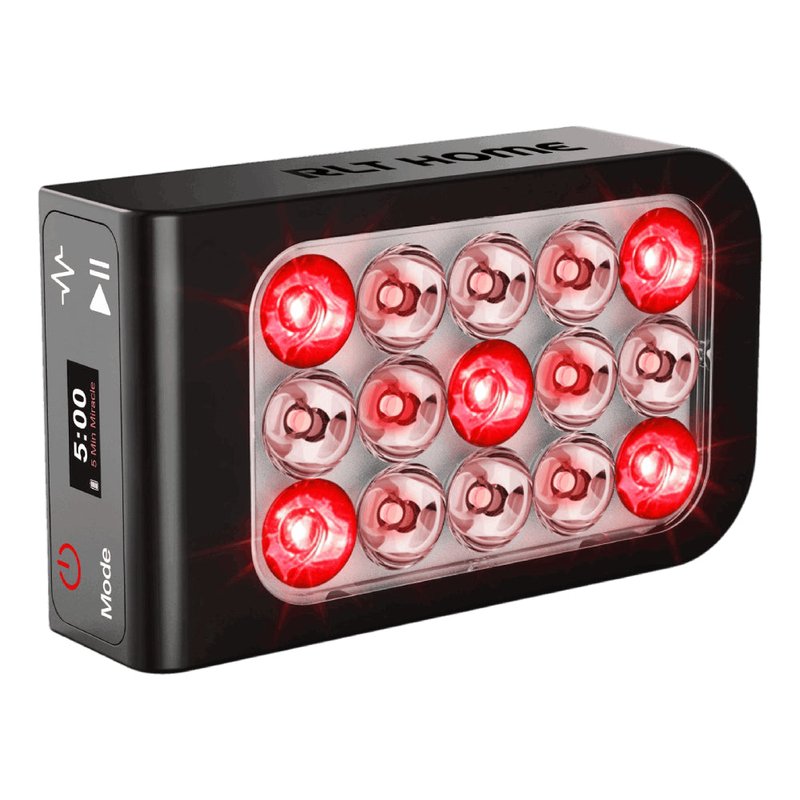
A cordless handheld has a built-in battery and finishes a session away from a wall socket. That rules out several products sold as “portable” (Bestqool BQ40, Red Light Rising Target Light 2.0, Red Light Man Infrared Mini, Novaa Light Pad), plus strap-on wearables such as Kineon MOVE+ and FlexBeam and facial wands, which are a different product class.
That left 23 confirmed cordless handhelds; the ten with enough published data are scored here on the same 14 criteria as our 18-brand panel ranking, each out of 10 for a total out of 140. One warning: almost every irradiance figure in this category is a manufacturer claim. Where an independent reading exists we show it beside the claim, and where a brand publishes its own spectrometer readings at stated distances, as RLT Home does, we label them brand-commissioned.
RLT Home – Best overall: widest spectrum, densest array, highest figure at distance, top-rated brand
- 7 wavelengths: 633, 660, 810, 830, 850, 940, 1064 nm; 15 LEDs, 22 chips
- Brand spectrometer readings: 115 / 69 / 42 / 30 mW/cm² at 3 / 6 / 9 / 12 in; 359-481 at LED surface
- 10,000 mAh / 37 Wh battery, 16 sessions (80 min) per charge, 4 h charge, 0.52 kg
- 1-year warranty, 60-day full refund, hard-shell case included

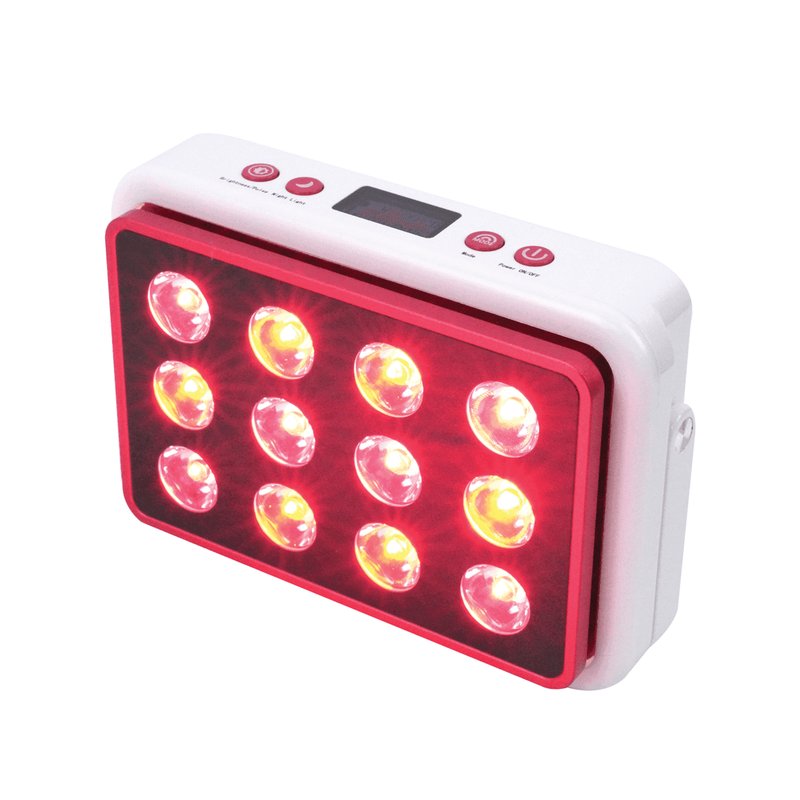
Mito Red Light – The safest proven pick: no weak spot and a 2-year warranty
- 5 wavelengths: 630, 660, 810, 830, 850 nm; 12 dual-chip LEDs
- Claimed 100 mW/cm² (solar) and 40 mW/cm² (spectroradiometer) at 3 in
- 3,000 mAh UL-listed battery, 2.5-3 h runtime, 1.5 lb
- 2-year warranty, 60-day money-back, free US shipping

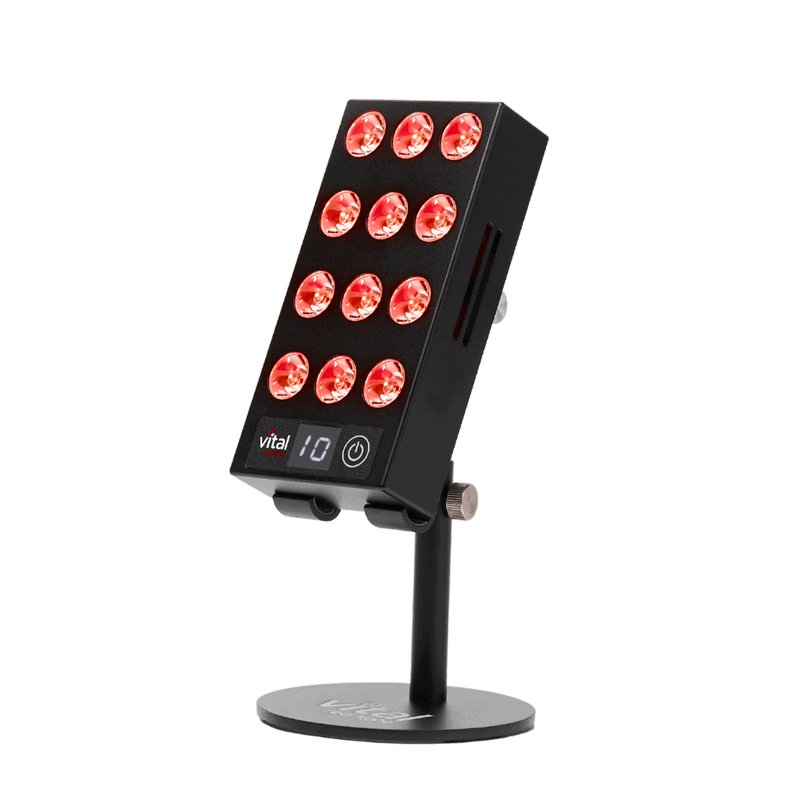
Vital Red Light – Best spec per dollar and the longest claimed runtime
- 4 wavelengths: 630, 660, 810 or 830 (page conflicts), 850 nm; 12 x 5 W LEDs
- Claimed 150-210 mW/cm² (no distance stated)
- 10,000 mAh battery, 4-5 h claimed runtime, 1.3 lb
- 3-year warranty, 30-day returns

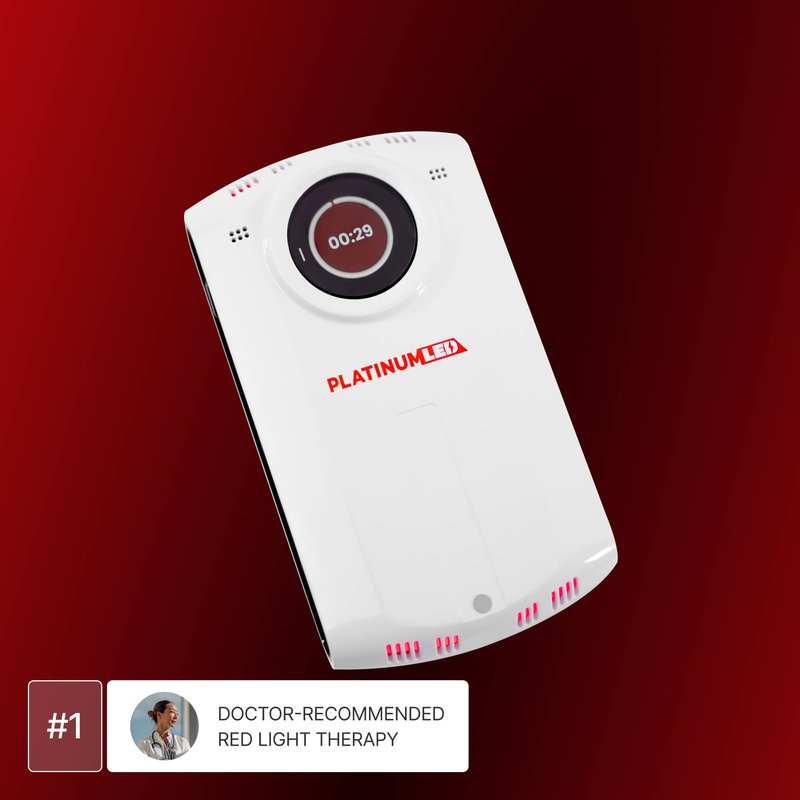
PlatinumLED – Richest controls and lightest body, lowest measured output
- 2 wavelengths: 660, 850 nm; LED count not stated (12 per independent review)
- No irradiance claim; measured 7.9 mW/cm² at 6 in
- Battery not stated; up to ~3 h or 18 sessions; 289 g
- 3-year warranty, 60-day returns with restocking fee

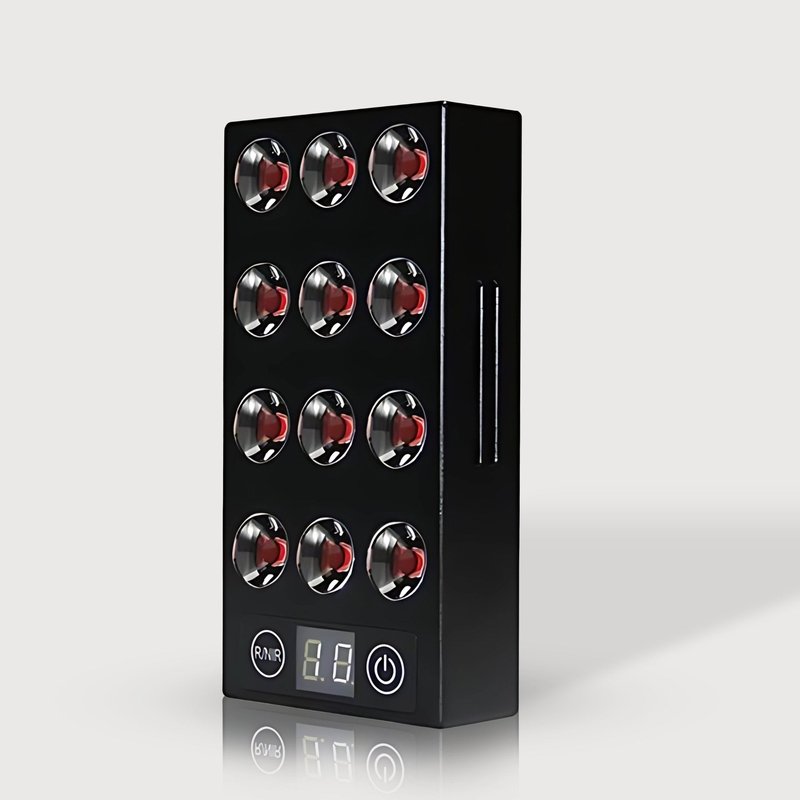
Rouge – Slimmest body and a reviewer favorite, pending US price
- 2 wavelengths: 660, 850 nm; 12 dual-chip LEDs
- Claimed >100 mW/cm² at 8 cm; measured ~15 mW/cm² average at 6 in
- “10,000 mA” battery; >2 h claimed; 5.9 x 2.99 x 1.18 in
- Warranty 1 year (spec) or 3 years (marketing), 60-day returns

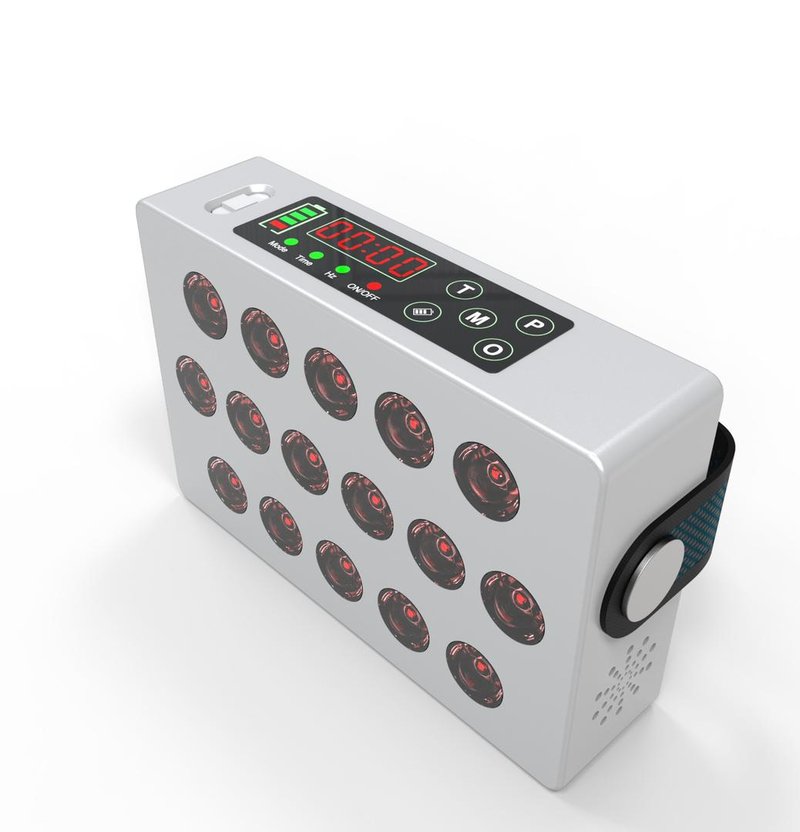
Light Path LED – 32 chips and three pulse rates, but bulky with no stated returns
- 3 wavelengths: 670, 810, 940 nm; 16 bulbs x 2 chips (32 chips)
- Claimed 98 mW/cm² at 0 in, 78-82 mW/cm² at 1 in
- Battery not stated; 2 h runtime, 3 h charge; weight not stated
- 2-year warranty, no return period stated

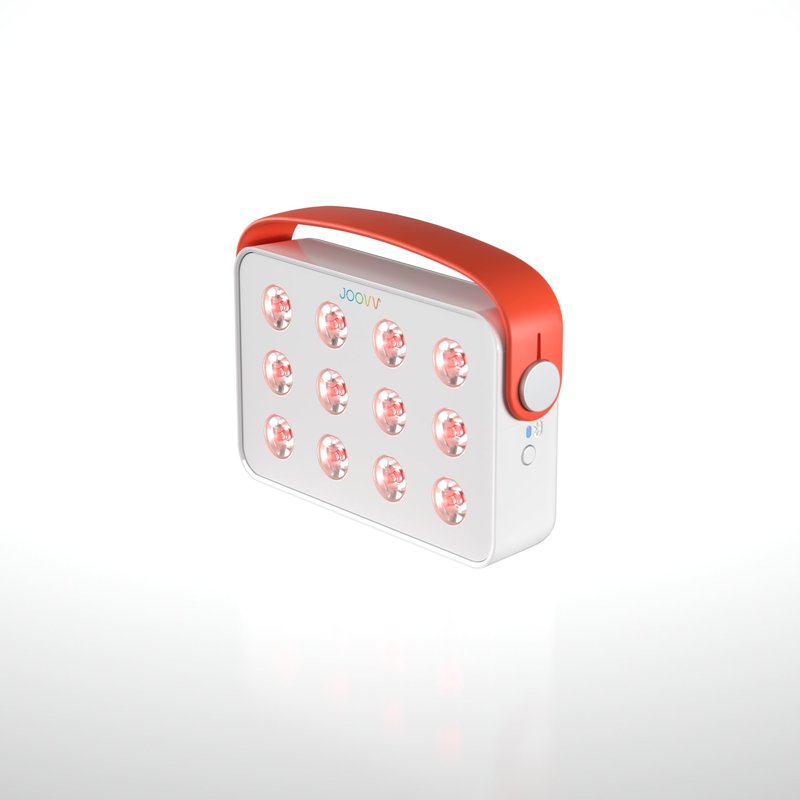
Joovv – Highest reviewer-measured output, weakest battery and value
- 2 wavelengths: 660, 850 nm; 12 multi-die LEDs
- Claimed >100 mW/cm² (no distance); measured 37.1 mW/cm² peak at 6 in
- Battery not stated; 2 h claimed, 1 h 15 min measured; 0.6 kg
- 1-year warranty, 30-day returns, runs on battery or AC

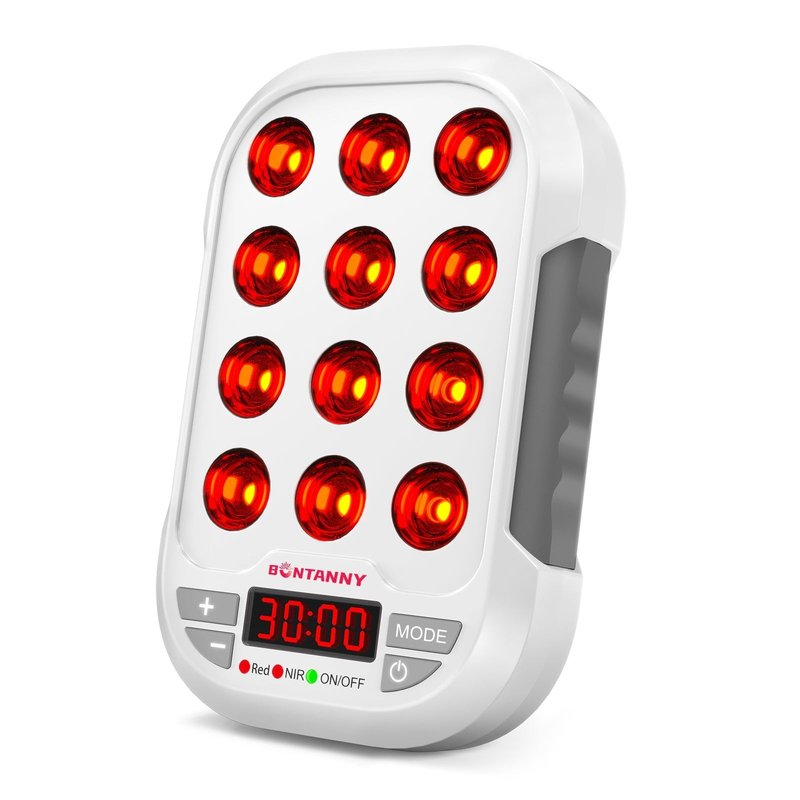
Bontanny – Budget pick with 1060 nm and a full distance curve
- 3 wavelengths: 660, 850, 1060 nm; 12 triple-chip LEDs (36 chips)
- Claimed 75 / 65 / 53 / 46 mW/cm² at 0 / 3 / 6 / 12 in
- 3,000 mAh battery, 2.5-3 h runtime, 0.88 lb
- 3-year warranty, no return period stated

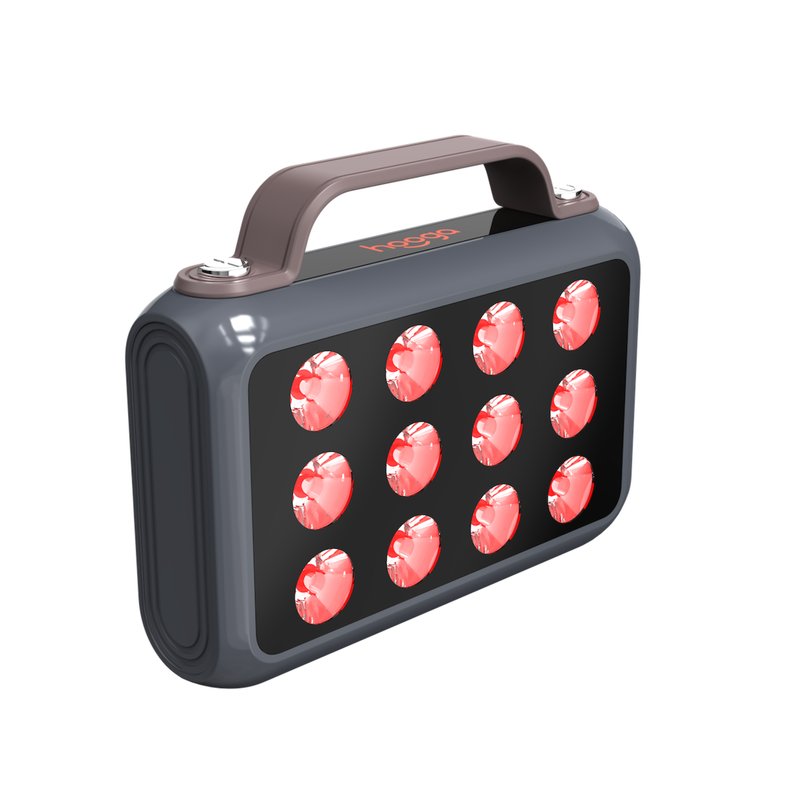
Hooga – Cheapest 12 x 5 W, 10,000 mAh unit, light on features
- 2 wavelengths: 660, 850 nm; 12 x 5 W LEDs
- Claimed 70 mW/cm² at 3 in, 40 mW/cm² at 6 in (method not stated)
- 10,000 mAh battery, about ten 10-min sessions, 8 h charge, 1.3 lb
- 1-year warranty, 60-day returns

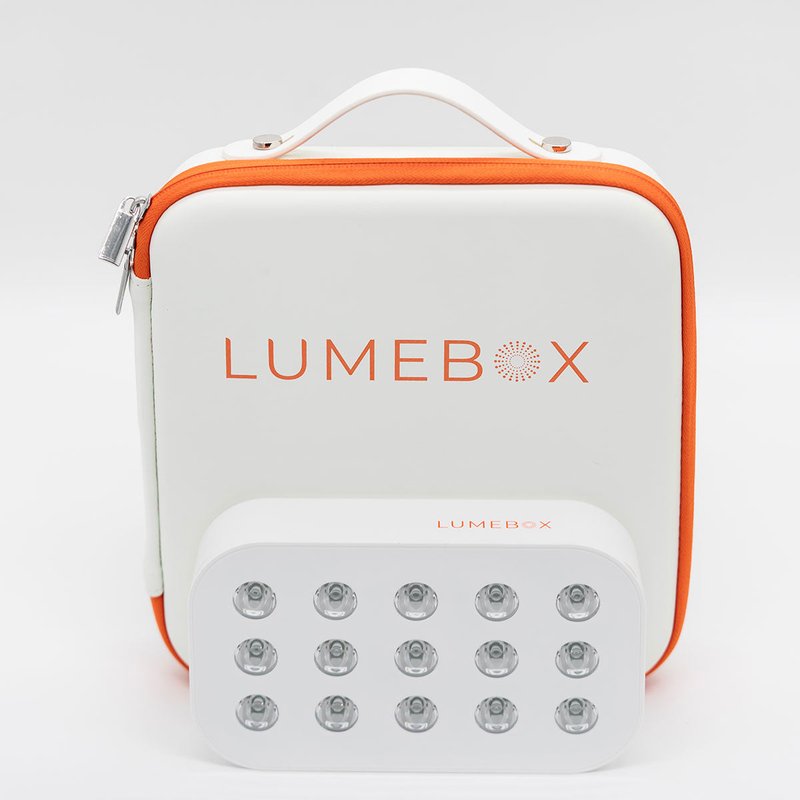
Lumebox – The best-known name, the thinnest spec sheet: no output figure, no runtime, $629
- 2 wavelengths: 660 and 850 nm from dual-chip bulbs; LED count not published
- No irradiance figure at any distance; radiant output 6.9 W stated in the manual
- Internal Li-ion battery, capacity and runtime not stated; 12-min cycle plus 3-min cool-down; 3 h charge
- 1-year warranty, 30-day returns with a 15% restocking fee, travel case and eyewear included
Spec comparison: all ten handhelds side by side
Manufacturer figures unless labeled. “Not stated” means the maker publishes nothing. Independent measurements are from Light Therapy Insiders and are labeled by year, because the 2021 figures are peak readings and the 2026 figures are 10-point averages, and the two are not comparable with each other.
| Spec | RLT Home Total Spectrum Focus |
Mito MitoPRO Mobile |
Vital Charge |
PlatinumLED BIOMAX GO |
Rouge Nano |
Light Path Diesel Mini |
Joovv Go 2.0 |
Bontanny BO-60 |
Hooga Charge |
Lumebox 2.0 |
|---|---|---|---|---|---|---|---|---|---|---|
| Overall score | 105 / 140 | 100 / 140 | 93 / 140 | 86 / 140 | 84 / 140 | 83 / 140 | 81 / 140 | 80 / 140 | 76 / 140 | 70 / 140 |
| Price (list) | $595 | $399 | $299 | $299 | CA$380 | $374 | $549 | $209 | $199 | $629 |
| Sale price (Oct 2026) | $395 Fall Sale | $349 | No discount | No discount | CA$285 (approx. US$205, US price to be confirmed) | $299 | No discount | $139 | No discount | No discount; stand $59 extra |
| Wavelengths | 633, 660, 810, 830, 850, 940, 1064 nm (7) | 630, 660, 810, 830, 850 nm (5) | 630, 660, 810 or 830, 850 nm (4; page conflicts on the third) | 660, 850 nm (2) | 660, 850 nm (2) | 670, 810, 940 nm (3); Blue Combo adds 450 | 660, 850 nm (2) | 660, 850, 1060 nm (3) | 660, 850 nm (2) | 660, 850 nm (2), both from each dual-chip bulb |
| LEDs | 15 LEDs, 22 chips, gapless 5 x 3, 30 degree lenses, “5 W” LEDs | 12 dual-chip lenses (24 chips), 60 degrees; wattage not stated | 12 x 5 W, 30 degrees | Not stated by maker; 12 single-chip per LTI | 12 dual-chip (24 chips); wattage not stated | 16 bulbs x 2 chips (32 chips), 30 degrees | 12 multi-die; “up to 5 W” light output | 12 triple-chip (36 chips), 60 degrees, 10 W “real power” | 12 x 5 W, 60 degrees, 12 W actual draw | Not stated by maker; 120 dual-chip per independent reviewers; radiant output 5.4 W red, 6.1 W NIR, 6.9 W both (manual) |
| Claimed irradiance (distance) | 115 mW/cm² at 3 in; 69 at 6 in; 42 at 9 in; 30 at 12 in (spectrometer, brand-commissioned); 359-481 at LED surface (spec table floor >300) | 100 mW/cm² at 3 in (solar meter); 40 at 3 in (spectroradiometer); 150 at surface | 150-210 mW/cm² (no distance); 126 at 3 in on a retailer page | No numeric claim | >100 mW/cm² at 8 cm (lab test linked) | 98 mW/cm² at 0 in; 78-82 at 1 in | >100 mW/cm² (no distance) | 75 at 0 in; 65 at 3 in; 53 at 6 in; 46 at 12 in (mW/cm²) | 70 mW/cm² at 3 in; 40 at 6 in (method not stated) | No mW/cm² figure at any distance; “high irradiance” and “58% more red, 80% more NIR” than an unnamed portable |
| Independent measurement | None by a reviewer; brand-published spectrometer readings linked as “Third-Party Lab Results” (product live since 17 Oct 2026) | None | None | 7.9 mW/cm² at 6 in; 1.46 W flux (Oct 2026) | ~15 mW/cm² 10-point average at 6 in, integrating sphere; ~3 W flux (Aug 2026) | Ranked 3rd in 2021 test; figure not published in text | 37.1 mW/cm² peak at 6 in, spectrometer (2021) | None | None | None by instrument; community solar-meter readings of roughly 100-130 mW/cm² at contact reported, not comparable with spectrometer figures |
| Battery | 10,000 mAh / 37 Wh | 3,000 mAh, UL-listed | 10,000 mAh | Internal, capacity not stated | “10,000 mA” (one reviewer calls it USB-tethered; to be confirmed) | Not stated | Not stated | 3,000 mAh | 10,000 mAh | Internal Li-ion, not user-serviceable; capacity not stated; 500 or more cycles |
| Runtime | 80 min (16 x 5-min sessions) | 2.5-3 h | 4-5 h claimed (three figures on one page) | Up to ~3 h / 18 sessions | >2 h / 10-12 sessions claimed; 2021 unit shut off before 2 h | 2 h; ran past 2 h in 2021 test | Up to 2 h claimed; 1 h 15 min measured | 2.5-3 h | About ten 10-min sessions (~100 min) | Not stated; 12-min cycle then a mandatory 3-min cool-down; 6 h between sessions |
| Charge time | ~4 h; USB-C 5 V 2 A; no fast charging; adapter not included | Not stated; 9 V 2 A input | Not stated; 100-240 V adaptor | Not stated; USB-C | Not stated; USB-C | 3 h; USB | ~5.5 h; 9 V adaptor; runs on battery or AC | Not stated | ~8 h; USB-C | Up to 3 h; 9 V 3 A adapter; will not run while plugged in |
| Weight | 0.52 kg (1.15 lb) | 1.5 lb (0.68 kg) | 1.3 lb (0.6 kg) | 289 g per LTI; not stated by maker | Not stated (under 1 lb per Outliyr; 800 g ship weight) | Not stated (“bulky, heavy” per LTI) | ~0.6 kg (1.32 lb) | 0.88 lb | 1.3 lb | Not stated (“25% bigger than most handheld devices”) |
| Timer / modes | 4 presets (5 Min Miracle, Skin, Pain & Recovery, Deep & Brain); fixed 5-min sessions; auto-off; 42 °C thermal cutoff; child lock | Brightness control, low-blue ambient light, built-in stand and strap; timer not stated | Red / NIR selectable; 10-min auto shut-off | 15/30 min presets, adjustable 1-30 min, 0-100% intensity, voice control, touchscreen | 3 modes (660 / 850 / both); timer not stated | Timer; 3 modes (red / NIR / both) | 10-min session then forced 10-min cooldown; Ambient mode; alarm clock; Bluetooth app | Timer referenced; modes not stated | Not stated; one cooling fan | Red, NIR or both; 6- and 12-min timer beeps; no presets or intensity control |
| Pulsing | 10 Hz and 40 Hz presets; “0-40 Hz adjustable” | Optional 10 Hz NIR | Not stated | Steady or pulsed | Not stated | 2.5 / 10 / 40 Hz or off | Recovery+ pulsing | Not stated | Not stated | None |
| FDA status (as stated) | “FDA registered, 510(k) exempt general wellness device” plus a “Class II” badge; CE, RoHS, FCC claimed; no numbers published | “FDA Class II Registered”, registration #288202; FCC, RoHS, CE | “FDA-Cleared Technology*” with footnote; no K-number | General wellness; IEC 60601 certified; ETL; FDA not stated | “FDA Certified” badge vs general-wellness footer | “Class II Registered” | “Class II Medical Device”; Intertek IEC 60601; no FDA number | “FDA registered”, “third-party tested” | Not stated (general wellness disclaimer) | “FDA-registered” plus a “Class II Medical Device” badge; IEC electrical and optical safety tested; EMF 0.2 microtesla at 0 cm; CE not stated |
| Warranty | 1 year | 2 years | 3 years (a badge file is named 2-year) | 3 years | 1 year (spec table) vs 3 years (marketing) | 2 years (spec) vs “up to 5-year” elsewhere | 1 year | 3 years (FAQ) | 1 year | 1 year (manual) |
| Trial / returns | 60 days from delivery; full refund; no restocking fee; customer pays return | 60-day money-back | 30 days; no restocking fee; customer pays return | 60 days; return shipping and restocking fee charged | 60 days, “no questions asked” | Not stated; 6-month Trade Up program only | 30 days | Not stated | 60 days; return shipping deducted | 30 days from receipt; 15% restocking fee; customer pays return shipping |
| Shipping / stock | Free insured US shipping; delivery expected 11 Nov 2026; FAQ says worldwide | In stock; free US shipping; HSA/FSA | In stock; ships from Boca Raton, FL | In stock; terms not detailed | Out of stock at capture; free US and Canada shipping | Red/NIR sold out at capture | US shipping; HSA/FSA; dock $150 extra | In stock | Sold out at capture | In stock; ships from the US; $59.99 flat to Canada, Australia and the UK |
| In the box | Device, silicone strap, hard-shell zip case, USB-C cable (no adapter), blackout goggles, manual, personalized plan | Not stated | Device, power cable, eyewear, stand, hand strap, guide (case listed in features but not box) | Device, goggles, USB-C cable, manual | Nano, power cord, travel pouch (hard case also mentioned); goggles not listed | Goggles, charging cable, manual | Device, travel case, 9 V adaptor, manual, eyewear | Not stated | Charge, USB-C cable, goggles, manual | Handheld, travel case, in-unit battery, comfort-grip accessory, AC adapter, manual, protective eyewear |
Scorecard: 14 criteria, each out of 10
8-105-71-4
| Brand | Score | Wavelengths | LED array | Irradiance | Battery | Portability | Modes | Build | Regulatory | Warranty | Trial | Reviews | Support | Delivery | Value |
|---|---|---|---|---|---|---|---|---|---|---|---|---|---|---|---|
| 1. RLT Home Total Spectrum Focus | 105 | 10 | 9 | 9 | 7 | 7 | 8 | 8 | 7 | 5 | 8 | 9 | 6 | 5 | 7 |
| 2. Mito MitoPRO Mobile | 100 | 8 | 7 | 7 | 7 | 6 | 7 | 6 | 7 | 7 | 8 | 8 | 7 | 7 | 8 |
| 3. Vital Charge | 93 | 7 | 7 | 5 | 8 | 6 | 5 | 7 | 4 | 8 | 5 | 9 | 6 | 7 | 9 |
| 4. PlatinumLED BIOMAX GO | 86 | 5 | 4 | 3 | 7 | 8 | 9 | 8 | 6 | 8 | 6 | 5 | 7 | 6 | 4 |
| 5. Rouge Nano | 84 | 5 | 6 | 7 | 6 | 8 | 4 | 6 | 4 | 5 | 8 | 7 | 6 | 4 | 8 |
| 6. Light Path Diesel Mini | 83 | 7 | 8 | 6 | 6 | 4 | 8 | 6 | 6 | 7 | 2 | 8 | 6 | 3 | 6 |
| 7. Joovv Go 2.0 | 81 | 5 | 6 | 8 | 4 | 6 | 7 | 8 | 7 | 5 | 5 | 4 | 7 | 6 | 3 |
| 8. Bontanny BO-60 | 80 | 7 | 7 | 6 | 6 | 7 | 3 | 5 | 6 | 8 | 2 | 4 | 4 | 6 | 9 |
| 9. Hooga Charge | 76 | 5 | 6 | 6 | 5 | 5 | 3 | 5 | 3 | 5 | 7 | 8 | 6 | 4 | 8 |
| 10. Lumebox 2.0 | 70 | 5 | 6 | 3 | 4 | 5 | 4 | 7 | 6 | 5 | 3 | 7 | 6 | 6 | 3 |
The Focus leads by five points. It takes the top score for Wavelengths, LED array and Irradiance, ties for the top in Build and Trial, and scores 9 on Reviews, which we score at brand level as on our panel ranking: RLT Home holds a rating of 4.9/5 from more than 290 reviews on third-party review sites, the highest in this ten, even though the Focus itself has no product reviews yet. Its 5s for Warranty and Delivery are where it trails. Mito takes second with no score below 6, Vital is third on 93 with a 5/5 brand record on third-party review sites, and the middle of the table is tight: the BIOMAX GO, Rouge and Light Path sit at 86, 84 and 83, with the Joovv on 81 after a record of about 3/5 on third-party review sites, the weakest brand rating in the field.
Brand by brand: why each handheld landed where it did
1. RLT Home Total Spectrum Focus
On paper the Focus is not an incremental step; it is a different class of array. Seven wavelengths (633, 660, 810, 830, 850, 940, 1064 nm) compare with two on the Joovv, Rouge, BIOMAX GO, Hooga and Lumebox, three on the Bontanny and Light Path, four on the Vital and five on the Mito, and it is the only handheld with a true 1064 nm band. Its 15 LEDs carry 22 chips in a gapless 5 x 3 array under 30 degree lenses, mapped LED by LED in the 48-page manual. The 10,000 mAh, 37 Wh pack is the largest energy store in the category, the four presets with 10 Hz and 40 Hz pulsing are matched only by the Light Path, and a 42 °C thermal cutoff, child lock, blackout goggles and a hard-shell case round it out. That earns the top score for Wavelengths and LED array and ties for the top in Build and Trial.
It also takes the top Irradiance score, and the reason is disclosure rather than the headline number. The Focus is the only cordless handheld whose page publishes spectrometer readings at four distances: 115 mW/cm² at 3 inches, 69 at 6, 42 at 9 and 30 at 12, measured, the page says, with a spectrometer rather than a solar power meter, alongside a per-LED surface range of 359 to 481 mW/cm². The spec table’s “>300” is a floor that every LED clears and the manual’s 400 per LED is the approximate average, so the figures agree once read that way. The 69 mW/cm² at 6 inches is the highest spectrometer figure in this field: Joovv’s 37.1 is a 2021 peak reading, Block Blue Light claims more than 45 for its torch, Rouge averages about 15 and the BIOMAX GO 7.9. Two things are still missing, and they cost the one point: the readings are brand-commissioned, linked from the page as “Third-Party Lab Results” without the lab being named, and no reviewer has yet put an instrument on a unit. On regulatory status the page calls the device an “FDA registered, 510(k) exempt general wellness device” and lists CE, RoHS and FCC, the fullest set of marks in the ten; a panel-boilerplate “Class II Medical Device” badge on the same page and no published numbers cost it a point.
The remaining weaknesses are about track record, not hardware. The 10,000 mAh, 37 Wh pack is the largest in the field and delivers 16 five-minute sessions per charge at the highest measured output here, so each session carries more energy than a longer-running, lower-output rival delivers in the same time; counted in minutes alone, 80 is still the shortest continuous runtime bar the Joovv’s measured 75, which implies the array draws roughly 28 W. Recharging takes about 4 hours over USB-C with no adapter included and a manual warning against fast chargers. The warranty is 1 year, half Mito’s and a third of Vital’s, and there is no intensity control. The product itself is brand new: published 17 October 2026, no reviews of the Focus yet, no third-party coverage, first deliveries expected around 11 November. Its 9 for Reviews is therefore the brand’s score, not the device’s: we score Reviews at brand level as on our panel ranking, and RLT Home’s rating of 4.9/5 from more than 290 reviews on third-party review sites is the highest in this ten. At $395 on the Fall Sale it buys the most wavelengths and chips per dollar in the field; at the $595 list price it would be the second most expensive cordless handheld on sale, $46 above the Joovv and $34 below the Lumebox. The Focus leads this table on wavelengths, array, measured irradiance at distance, build, trial and brand reputation, and trails the Mito on warranty, continuous runtime, charge time and product track record. We will re-check the score once independent reviewer measurements and reviews of the Focus itself exist.
- Seven wavelengths including 940 and 1064 nm; no rival has more than five
- Densest array in the ten: 15 LEDs, 22 chips, gapless, 30 degree lenses
- Largest battery (37 Wh); 10 Hz and 40 Hz pulsing; thermal cutoff and child lock
- Spectrometer readings published at 3, 6, 9 and 12 inches; 69 mW/cm² at 6 in is the highest in the field
- Top-rated brand in the ten: 4.9/5 across 290+ reviews on third-party review sites
- Hard-shell case, strap and goggles included; 60-day full refund
- Irradiance readings are brand-commissioned; the testing lab is not named on the page; no reviewer-run measurement yet
- Shortest continuous runtime at 80 minutes (16 sessions); 4-hour charge; no fast charging; no adapter in box
- 1-year warranty, the shortest tier in the field
- No reviews of the Focus itself yet; launched 17 October 2026; delivery expected 11 November; $595 list is the second highest in the field after the Lumebox’s $629
2. Mito Red Light MitoPRO Mobile
The MitoPRO Mobile is the sensible choice in a category full of unverified superlatives, and the only handheld here with no score below 6. Five wavelengths (630, 660, 810, 830, 850 nm) put it second only to the Focus, and it is the only rival with both 810 and 830 nm. Where Mito stands apart is disclosure: its page publishes 100 mW/cm² at 3 inches by solar meter, 40 mW/cm² by spectroradiometer and 150 at the surface, side by side. That 2.5x gap is exactly the inflation we describe in the methodology, and Mito is the only handheld maker that volunteers it, though the page files those 3-inch figures under a “6 Inches” header and nobody outside Mito has measured the unit. A 2-year warranty, 60-day money-back guarantee, free US shipping and a published FDA registration number (#288202) do the rest; registration is a listing rather than clearance, the same status every registered brand here holds, and Mito earns one point above that baseline for publishing the number. The caveats: 1.5 lb makes it the heaviest device in the top five, no case is listed, and Mito’s older Mito Mobile Super is under an open FDA Class 2 recall after one unit caught fire while charging. Mito says the MitoPRO Mobile is not affected and offers Super owners a free replacement or refund, but we held Build at 6 because of it. Mito sits second, five points behind the Focus, and keeps the edge a cautious buyer cares about: a 2-year warranty against 1, longer continuous runtime, a faster charge and a product with reviews behind it, on a brand record of 4.5/5 on third-party review sites from one of the largest review bases in the category. The Focus leads on wavelengths, array, measured irradiance at distance, build, trial and brand reputation. For a proven product in hand today, Mito is the safest pick.
- Five wavelengths including both 810 and 830 nm
- Only maker to publish solar-meter and spectroradiometer figures together
- 2-year warranty, 60-day money-back, free US shipping, FDA registration number published
- Heaviest in the top five at 1.5 lb; no case listed
- No independent test; charge time and LED wattage not stated
- Sister product Mito Mobile Super under an FDA battery recall
3. Vital Red Light Vital Charge
The Vital Charge is the best spec per dollar in the ten, and it is not close: $299 buys four wavelengths, 12 x 5 W LEDs behind 30 degree lenses, a 10,000 mAh battery with the longest claimed runtime in the field (4 to 5 hours), a stand, hand strap, eyewear and a 3-year warranty, from a brand with an average of 5/5 across 73 reviews on third-party review sites. It sits third because Vital’s own page keeps contradicting itself. The third wavelength is 810 nm in the spec table and 830 in the body copy, runtime appears as 5 hours, “+4 hours” and “up to 4 hours”, and the warranty text says 3 years while the badge file is named “2_Year_Warranty”. The “150-210 mW/cm²” claim carries no distance (a retailer quotes 126 at 3 inches) and no independent instrument has checked it. The page says “FDA-Cleared Technology*”, then footnotes that such a claim should rest on a 510(k) and gives no K-number; the badge implies clearance the brand does not show, while its actual status, FDA registered, is the same listing every registered brand here holds, so Regulatory sits one point below the baseline. Modes are red or NIR with a 10-minute auto-off and no pulsing, and returns are 30 days with the customer paying shipping, half the window Mito, RLT Home, Rouge and Hooga offer.
- Four wavelengths, 10,000 mAh and a 3-year warranty for $299
- Longest claimed runtime in the field at 4-5 hours
- Stand, hand strap and eyewear in the box; ships from Florida
- Page conflicts on third wavelength, runtime, warranty and case
- Irradiance claim has no distance; no independent test; no 510(k) behind “FDA-Cleared” wording
- 30-day returns; no pulsing or intensity control
4. PlatinumLED BIOMAX GO
PlatinumLED built the best control panel in the category and attached it to the weakest light engine anyone has measured. The BIOMAX GO offers 15 and 30 minute presets, an adjustable 1 to 30 minute timer, 0 to 100% intensity, steady or pulsed output, voice control and a touchscreen on a detachable stand, a 9 for Modes and the highest in the ten. At 289 g it is the lightest mini-panel here, less than half the Mito’s weight, with IEC 60601 and ETL marks, zero EMF and a 3-year warranty. The output is the problem. PlatinumLED publishes no irradiance figure, LED count or wattage, and the one independent review, in October 2026, found 12 single-chip LEDs producing 7.9 mW/cm² at 6 inches and 1.46 W of flux, the lowest optical output in the ten, judged too weak for deep joints. Battery capacity is not stated, though up to about 3 hours or 18 sessions is a respectable claim. At $299 it costs the same as the Vital Charge, which has twice the wavelengths, and the 60-day return window is undercut by a restocking fee plus return shipping. Buy it for the timer, dimming and feather weight; not for power per dollar. At 86 it takes fourth, two points ahead of the Rouge, though PlatinumLED’s record on third-party review sites sits at about 3/5 and the GO itself has a single independent review.
- Richest controls: 1-30 min timer, 0-100% intensity, pulsing, voice, touchscreen
- Lightest mini-panel in the ten at 289 g
- IEC 60601 and ETL certified; 3-year warranty; in stock
- Lowest measured output in the ten: 7.9 mW/cm² at 6 in
- No irradiance, LED count, wattage or battery capacity published; two wavelengths only
- Restocking fee and return shipping charged on returns
5. Rouge Nano
The Rouge Nano is the reviewer’s handheld: Light Therapy Insiders calls it an enduring personal favorite as of August 2026, Outliyr makes it a travel pick, and it comes up repeatedly on r/redlighttherapy. At 5.9 x 2.99 x 1.18 inches it has the slimmest body in the field and a metal shell praised for durability. Rouge was, until the Focus, the only maker to tie its irradiance claim to a stated non-contact distance, “>100 mW/cm² at 8 cm”, with a lab test linked; the independent number is roughly 15 mW/cm² as a 10-point average at 6 inches in August 2026, a different method from the Joovv’s 2021 peak figure but well above the BIOMAX GO’s 7.9. Several things need confirming before you order. The page lists “Battery Capacity: 10,000mA” and USB-C charging, but one reviewer’s table calls it USB-powered with no battery, and the 2021 unit shut off before its claimed 2 hours. The warranty is 1 year in the spec table and three years in a marketing block, badges say “FDA Certified”, which implies a certification the brand does not have, while the footer describes a general-wellness device, and no timer or pulsing is stated. Pricing is in Canadian dollars (CA$285 on sale, roughly US$205 by our estimate; reviewers quote US$291 to $295) and the Nano was out of stock at capture. If the US price lands near $205 it is the cheapest 12 x 5 W, 10,000 mAh handheld anywhere, with 60-day no-questions-asked returns. At 84 the Nano sits fifth, two points behind the BIOMAX GO; Rouge has no review base on third-party review sites, so its Reviews score of 7 rests on Reddit and YouTube sentiment of roughly 4/5.
- Slimmest body in the field with a durable metal shell
- Ties its claim to a stated distance with a lab link; independently measured at ~15 mW/cm² at 6 in
- 60-day “no questions asked” returns; free US and Canada shipping
- Battery status conflicts between the maker and one reviewer
- Warranty stated as both 1 year and 3 years; “FDA Certified” badge contradicted by footer
- No timer or pulsing; out of stock; USD price not published
6. Light Path LED Diesel Mini (Red/NIR)
The Diesel Mini has the second highest published chip count in the ten (16 bulbs x 2 chips, 32 in total, behind 30 degree lenses), three wavelengths at 670, 810 and 940 nm, and the most flexible pulsing of any device bar the Focus: 2.5, 10 or 40 Hz or off, with a timer and three modes. Light Path states irradiance at distances, 98 mW/cm² at contact and 78 to 82 at 1 inch, and the device placed third in the 2021 independent handheld test, running past its claimed 2 hours, though the measured figure was held in an image and included blue light. The brand record is good too: 4.8/5 from 92 reviews on third-party review sites. The trade-offs are physical and commercial. At 6 x 4 x 1.5 inches with no stated weight, the independent reviewer called it bulky, heavy and uncomfortable for 20-minute sessions, and no case is included. Light Path publishes no return period at all, only a 6-month Trade Up program, so Trial scores a 2. The warranty is 2 years in the spec section and “up to 5-year” elsewhere, and the Red/NIR version was sold out at capture. At $299 on sale from $374 you pay Vital Charge money for better pulsing, a heavier body and no return window.
- 32 chips, second only to the Bontanny among published counts; three wavelengths including 940 nm
- Pulsing at 2.5, 10 and 40 Hz with timer and three modes
- Irradiance stated at two distances; ran past 2 hours in testing
- Bulky and heavy per independent review; weight not stated; no case
- No return period, only a 6-month Trade Up program
- Warranty stated as 2 years and “up to 5-year”; sold out at capture
7. Joovv Go 2.0
The Joovv Go 2.0 holds the most useful reviewer-run number in the category: 37.1 mW/cm² peak at 6 inches, measured by spectrometer in 2021, the highest independent reading for any cordless handheld, though the Focus’s brand-published 69 mW/cm² at the same distance now sits above it. That earns an 8 on Irradiance even though Joovv’s own “>100 mW/cm²” claim has no distance. Intertek certification to IEC 60601, the one named third-party safety certification in the ten, a Class II designation, a forced 10-minute cooldown after each session, a travel case and eyewear and the option to run on battery or the 9 V adaptor make Build strong and lift Regulatory one point above the baseline, though the page does not state FDA registered status. The battery is the problem: Joovv does not state capacity, claims “up to 2 hours”, and in a timed test the unit shut down at 1 hour 15 minutes with 20% still showing, 62% of the claim, with a 5.5-hour recharge. Then there is price: $549 for two wavelengths, 12 LEDs and a 1-year warranty, with the dock a separate $150 and returns limited to 30 days. One independent reviewer put it fairly: competitors offer comparable or better specs for less. At 81 the Go 2.0 sits seventh, pulled down by a record of about 3/5 on third-party review sites, the weakest brand rating in the ten, and a Value score of 3, the lowest here alongside the Lumebox.
- Highest reviewer-measured irradiance of any handheld
- Intertek-certified to IEC 60601; Class II medical device
- Runs on battery or AC; travel case, eyewear, Bluetooth app, HSA/FSA eligible
- Battery capacity not stated; measured 1 h 15 min against a 2-hour claim; 5.5-hour recharge
- $549 for two wavelengths; dock $150 extra
- 1-year warranty, 30-day returns; FDA registered status not stated on the page
8. Bontanny BO-60
At $139 on sale from $209, the Bontanny BO-60 is the cheapest device in the ten by $60 and the only one apart from the Focus with a band near 1064 nm (Bontanny lists 1060). Its 12 triple-chip LEDs hold 36 chips, the most of any published count in the field, at a stated 10 W “real power”, and Bontanny is one of only two makers, with RLT Home, to publish a full irradiance curve by distance: 75 mW/cm² at contact, 65 at 3 inches, 53 at 6 and 46 at 12. That is the right way to present the number, even though the method is not stated and no independent instrument has checked it. The 3-year warranty ties for longest, and at 0.88 lb it is among the lightest units here. What you give up is everything around the hardware: no return period is stated anywhere, so Trial scores a 2; modes and pulsing are not stated; box contents and charge time are not listed; regulatory wording is a plain “FDA registered” and “third-party tested” with no numbers, which is the same listing status the leaders hold and, with no inflated badge, earns the baseline 6; and the brand appears only in Amazon-affiliate roundups with no independent review. For a budget buyer who accepts no stated returns, the price is hard to argue with.
- Cheapest in the ten at $139 on sale
- Three wavelengths including 1060 nm; 36 chips; full irradiance-by-distance curve
- 3-year warranty; 0.88 lb
- No return period stated anywhere
- Modes, pulsing, box contents and charge time not stated
- Amazon-tier brand with no independent review; “FDA registered” stated plainly but with no numbers
9. Hooga Charge
The Hooga Charge is the device r/redlighttherapy keeps asking about as the budget US pick: 12 x 5 W LEDs at 60 degrees, a 10,000 mAh battery, 660 and 850 nm, goggles in the box and a 60-day return window for $199, from a brand with a record of about 4.5/5 on third-party review sites. Hooga states irradiance at two distances, 70 mW/cm² at 3 inches and 40 at 6, though it does not say how those were measured, and the brand’s Hooga Dot patch tested at roughly half its claim, which tempers our confidence. The weaknesses are missing features and missing disclosure. No timer, modes or pulsing are stated. The 10,000 mAh pack is claimed to deliver only about ten 10-minute sessions, far less than the Vital gets from the same nominal capacity, and recharging takes about 8 hours, the slowest here. A cooling fan adds noise, nothing is stated on regulatory status, the warranty is 1 year, the 60-day returns deduct shipping, and it was sold out at capture. The Vital does almost everything better for $100 more and the Bontanny undercuts it by $60.
- $199 for 12 x 5 W LEDs and a 10,000 mAh battery
- Irradiance stated at 3 and 6 inches; zero EMF at 6 inches
- 60-day return window; goggles included
- No timer, modes or pulsing stated
- About 100 minutes of runtime and an 8-hour charge
- No regulatory status stated; 1-year warranty; cooling fan; sold out at capture
10. Lumebox 2.0
The Lumebox 2.0 is the handheld most people have heard of, and on paper it is the one that tells you least. The maker publishes two wavelengths, a combined 6.9 W of radiant output and a long list of safety tests, but no irradiance at any distance, no battery capacity, no runtime, no weight and no LED count. The 120-LED figure that circulates online comes from reviewers, not from Lumebox.
What it does well is coverage and polish: a treatment area the brand calls 25% larger than most handhelds, IEC and EMF testing, a travel case and eyewear in the box. Against that sit a $629 price, a 1-year warranty, 30-day returns with a 15% restocking fee and a mandatory 3-minute cool-down after each 12-minute cycle. It lands tenth not because it is a poor device but because the ten criteria that depend on published numbers cannot credit what is not published.
- Large dual-chip array and treatment area
- Third-party safety and EMF testing
- Strong brand recognition and reviewer coverage
- Travel case, eyewear and grip accessory in the box
- No irradiance figure anywhere, so output cannot be compared with rivals
- No battery capacity, runtime, weight or LED count published
- Forced 3-minute cool-down after every 12-minute cycle
- $629 with a 1-year warranty and a 15% restocking fee
How we score cordless red light handhelds
Every device is scored 1 to 10 on the same 14 criteria and totaled out of 140. Eleven criteria carry over unchanged from our 18-brand panel ranking; EMF, Hidden fees and Personal plans are replaced by Battery life, Portability and Support. The card score is the total divided by 14, labeled Exceptional (9 or above), Very Good (8 to 8.9), Good (6.5 to 7.9) or Fair (below 6.5). Ties are broken on Irradiance.
how many distinct bands the device emits and whether they reach the less common 940 and 1064 nm regions.
LED and chip count, array density, lens angle and whether LED wattage is published.
the maker’s claim, whether it is tied to a stated distance and instrument, and any independent measurement.
stated capacity, sessions per charge and energy delivered per session, any measured runtime and charge time. A higher-output array needs fewer minutes per dose, so minutes alone are not the whole story.
weight, dimensions and whether a case, stand or strap is included.
timers, presets, intensity control and pulsing options.
shell material, thermal protection, child lock, eyewear, safety certifications and any recall history at the brand.
whether the maker states its FDA status plainly. A clear statement scores the baseline, a published registration number or a named third-party safety certification adds a point, and a badge that implies clearance or certification the brand does not have removes one.
length in years, with a penalty where the page states two different figures.
length of the return window and whether restocking fees or return shipping are charged.
the brand’s review record on third-party review sites, or community sentiment where no review base exists, scored at brand level as on our panel ranking, plus independent hands-on and instrument coverage of the device.
brand track record, documentation, personalized plans and how problems have been handled.
stock status, shipping cost, delivery timing and HSA/FSA eligibility.
what the current price buys in wavelengths, chips, battery and warranty against the rest of the field.
A word on claims versus measurements. Independent, instrument-measured irradiance exists for just four current cordless handhelds (Joovv Go 2.0, Rouge Nano, BIOMAX GO and the Bon Charge Mini, which did not make the ten), all from one reviewer, and the 2021 figures are peak readings while the 2026 figures are 10-point averages, so even those are not directly comparable. Everything else on this page is a manufacturer claim, with one partial exception: RLT Home publishes brand-commissioned spectrometer readings for the Focus at 3, 6, 9 and 12 inches and links to them as “Third-Party Lab Results”, which is better disclosure than any rival offers but is not a reviewer-run test and does not name the lab. Most claims are taken at the LED surface with a solar power meter, an instrument built for broadband sunlight that can overstate narrowband LED output by two to three times; Mito’s own page shows a 2.5x gap between its solar-meter and spectroradiometer readings at the same 3 inches, and Block Blue Light shows a 2.4x gap at 6 inches. Output also collapses with distance, so a surface figure says little about the dose at the 6 to 12 inches most protocols use. We reward makers who state a distance and an instrument, which is why the Focus scores 9 on Irradiance rather than 10, and we score superlatives, including RLT Home’s “most powerful handheld” claim, on what can be checked. “FDA registered” means a listing, not clearance: every brand in the ten that states FDA status at all is registered and no more, and no handheld in this field publishes a 510(k) K-number. Vital’s “FDA-Cleared Technology” and Rouge’s “FDA Certified” badges imply more than that, Lumebox pairs its “FDA-registered” statement with a “Class II Medical Device” badge, and Hooga states nothing.
Bottom line: which cordless handheld should you buy?
- Best overall and most powerful at distance: RLT Home Total Spectrum Focus, 105 / 140. Seven bands, 22 chips, a brand-published spectrometer reading of 69 mW/cm² at 6 inches, the highest figure in the field, and the top-rated brand in the ten, for $395 on sale; deliveries begin in November and no reviewer has measured it yet.
- Safest proven pick, best for runtime and warranty: Mito MitoPRO Mobile, 100 / 140. Five wavelengths, honest two-instrument irradiance disclosure, 2-year warranty, 2.5 to 3 hours per charge, 60-day returns, in stock at $349.
- Best value: Vital Charge, 93 / 140. Four wavelengths, 10,000 mAh, 3-year warranty and the longest claimed runtime for $299.
- Lightest: PlatinumLED BIOMAX GO at 289 g, with the best controls and the weakest measured output.
- Highest reviewer-measured output: Joovv Go 2.0, 37.1 mW/cm² peak at 6 inches in 2021, if you can live with a 75-minute measured battery and a $549 price.
- Longest runtime: Vital Charge at a claimed 4 to 5 hours; Mito and Bontanny follow at 2.5 to 3 hours.
- Budget pick: Bontanny BO-60 at $139 with three wavelengths and a 3-year warranty, provided you accept no stated return policy.
If you want the best handheld on paper and the top-rated brand behind it, and can wait for November delivery with a 60-day safety net, order the Focus at $395. If you want a proven product in hand today with a 2-year warranty, buy the Mito. If you want the most light for the least money, buy the Vital. We will re-check the Focus score once independent reviewer measurements and reviews of the device itself exist.
Frequently asked questions
Do cordless handhelds match full-size panels?
No. The highest spectrometer figure for any handheld here is the Focus’s brand-published 69 mW/cm² at 6 inches; the best reviewer-run reading is 37.1 mW/cm² peak at 6 inches (Joovv, 2021), and the 2026 average-method readings sit between 7.9 and 15 mW/cm². A good mains-powered panel delivers several times that over a far larger area. Handhelds trade dose and coverage for the ability to target a knee, shoulder or jaw anywhere with no cord.
How far away should I hold a handheld?
Follow the maker’s protocol, because it depends on lens angle and mode. Most brands here recommend between contact and 12 inches; RLT Home’s Skin mode prescribes 6 to 12 inches. Output drops sharply with distance: Bontanny’s own curve falls from 75 mW/cm² at contact to 46 at 12 inches, and RLT Home’s spectrometer readings for the Focus fall from 115 at 3 inches to 30 at 12.
How long should a session last?
Most devices here default to 10-minute sessions (Joovv, Vital, Hooga) or a fixed 5 minutes (RLT Home Focus); the BIOMAX GO lets you set 1 to 30 minutes. Longer is not automatically better. Lower-output devices need more time at a closer distance to deliver the same dose, which is why an irradiance figure at a stated distance matters more than a headline number at the LED surface.
Battery or mains: which is better?
Mains wins on output and session length; battery wins on convenience. Battery claims run ahead of reality where anyone has timed them: the Joovv Go 2.0 delivered 62% of its claimed 2 hours. Capacity figures are not comparable on their own either; three devices quote 10,000 mAh at unstated voltage, and the Focus’s 37 Wh pack delivers the shortest continuous runtime, 80 minutes or 16 sessions, because its 22-chip array draws more power; at the highest measured output in the field, each of those sessions delivers more energy than a longer session on a weaker device. Compare sessions per charge, energy per session, measured runtime and charge time together, not mAh.
Why do irradiance claims differ so much between brands?
Three reasons. Instrument: a solar power meter can read two to three times higher than a spectrometer on the same LEDs, and most brands use solar meters. Distance: a figure at the LED surface is not comparable to one at 3 or 6 inches. Method: a peak reading as a sensor crosses an LED is higher than a 10-point average across the array. That is why Mito publishes 100 and 40 mW/cm² for the same device at the same distance, and why a surface figure such as RLT Home’s 359 to 481 mW/cm² per LED is so much larger than the same device’s 69 mW/cm² at 6 inches.
Is this site paid by the brands it ranks?
We earn a commission if you buy through our links, at no extra cost to you, and we have affiliate relationships with eight of the ten brands on this page. Brands cannot pay for a higher placement. The scores come from the 14-criteria method above and the figures come from the brands’ own pages and independent tests. A ranking that places our partner RLT Home first is the result of that method, scored on the same 14 criteria and the same brand-level Reviews basis as our panel ranking, and we will move it up or down as the evidence changes.
See also: Best Cordless Red Light Therapy Handhelds: 10 Brands Compared (2026)
The devices on this page are marketed as general wellness products and have not been evaluated by the FDA to diagnose, treat, cure or prevent any disease. Nothing here is medical advice. Red light therapy results vary by individual, device, dose and consistency of use. Consult a qualified healthcare professional before starting any new therapy, especially if you are pregnant, taking photosensitizing medication or have a diagnosed condition. Prices, stock and specifications were captured in October 2026 and may have changed.